Pueraria Mirifica: The Natural Remedies for Women
For centuries, Pueraria mirifica has been utilized in traditional medicinal systems of Southeast Asia, particularly in Thailand and Myanmar, where it has been valued for its role in supporting female health and vitality. Contemporary scientific research has sought to elucidate the biological basis of these traditional uses, revealing that the therapeutic potential of P. mirifica is closely associated with its distinctive phytoestrogenic composition and its capacity to modulate estrogen-responsive pathways (Chansakaow et al., 2000; Malaivijitnond, 2012).
The physiological effects of Pueraria mirifica
are largely attributable to its bioactive compounds, among which miroestrol has emerged as the most significant. This compound has attracted substantial scientific interest due to its pronounced estrogenic activity and its structural similarity to endogenous estrogens. Although traditionally associated with women’s health, phytoestrogens from P. mirifica may also exert modulatory effects in individuals of any sex experiencing hormonal imbalance, as estrogen receptors are widely distributed across multiple tissues in both males and females (Mueller et al., 2004).
Miroestrol as the Principal Bioactive Compound
Miroestrol is classified as a chromene-derived phytoestrogen and is considered the primary active constituent of Pueraria mirifica. Structurally, miroestrol closely resembles 17β-estradiol, the most potent endogenous estrogen in humans, enabling it to bind effectively to estrogen receptors alpha (ERα) and beta (ERβ) (Chansakaow et al., 2000).
In contrast to more commonly studied phytoestrogens such as daidzein and genistein, predominantly found in soy, miroestrol exhibits a markedly higher estrogen receptor binding affinity. Experimental studies have demonstrated that its estrogenic potency may approach that of synthetic estrogens under in vitro conditions, distinguishing P. mirifica from other phytoestrogen-containing botanicals (Mueller et al., 2004; Ishikawa et al., 2001).
This elevated receptor affinity has positioned Pueraria mirifica as a subject of investigation for menopausal health, where estrogen deficiency underlies many physiological and symptomatic changes.
Biological Effects Associated with Miroestrol Activity
Menopausal Symptom Modulation
Clinical and preclinical studies suggest that miroestrol may alleviate vasomotor symptoms such as hot flashes and night sweats, as well as urogenital discomfort and mood disturbances commonly associated with menopause (Malaivijitnond et al., 2004; Suthon et al., 2016).
Bone Metabolism and Skeletal Health
Through its interaction with estrogen receptors in bone tissue, miroestrol may contribute to the maintenance of bone mineral density, thereby potentially reducing the risk of postmenopausal osteoporosis (Dang et al., 2011).
Cardiovascular Support
Estrogenic signaling has been associated with improved lipid metabolism and vascular endothelial function. As such, miroestrol may indirectly support cardiovascular health by influencing cholesterol profiles and arterial elasticity (Santen et al., 2010).
Complementary Phytoestrogens in Pueraria mirifica
Although miroestrol is the defining compound of P. mirifica, its biological effects are supported by a complex matrix of additional phytoestrogens and isoflavonoids, including daidzein, genistein, puerarin, and deoxymiroestrol.
The synergistic interaction among these compounds is believed to enhance the overall physiological effects of P. mirifica, producing a broader and more balanced estrogenic response than isolated compounds alone.
Daidzein exhibits antioxidant activity and contributes to bone metabolism. It may be metabolized by intestinal microbiota into equol, a compound with enhanced estrogenic activity in certain individuals (Setchell & Clerici, 2010).
Genistein has been extensively studied for its antioxidant, anti-inflammatory, and cell-signaling regulatory properties, including potential inhibitory effects on abnormal cell proliferation (Dang et al., 2011).
Puerarin, while more abundant in Pueraria lobata, contributes vasodilatory, anti-inflammatory, and cardioprotective effects and complements the broader metabolic benefits of P. mirifica (Zhou et al., 2014).
Deoxymiroestrol, a biosynthetic precursor of miroestrol, is itself biologically active and contributes significantly to the high estrogenic potency unique to P. mirifica (Chansakaow et al., 2000).
Comparison with Other Pueraria Species
Although Pueraria mirifica and Pueraria lobata (kudzu) belong to the same genus, their phytochemical profiles and therapeutic applications differ substantially. P. mirifica is uniquely characterized by the presence of miroestrol and deoxymiroestrol, which are absent or present only in trace amounts in other Pueraria species (Ishikawa et al., 2001).
In contrast, P. lobata is dominated by high concentrations of puerarin and other isoflavone glycosides and is primarily studied for cardiovascular, neuroprotective, and metabolic applications rather than for direct hormonal modulation (Zhou et al., 2014). Comparative analyses confirm that P. mirifica exhibits significantly greater estrogenic activity, attributable specifically to its chromene derivatives.
Broader Applications and Safety Considerations
Beyond menopausal health, current research is exploring the potential applications of Pueraria mirifica in oncology, dermatology, and metabolic health. Certain constituents, particularly genistein and miroestrol, have demonstrated antioxidant and anti-inflammatory properties that may influence cellular aging and proliferation pathways (Dang et al., 2011).
Topical and systemic estrogenic effects have also been associated with improved skin elasticity, hydration, and collagen synthesis, suggesting possible benefits for skin and hair health (Thornton, 2013). Additionally, the isoflavone-rich composition may support cardiovascular and metabolic parameters, including lipid regulation and vascular function.
Despite its broad potential, Pueraria mirifica is not exclusively intended for female use. Estrogen receptors are present in multiple tissues across sexes, and phytoestrogens may exert modulatory effects in males as well. However, due to its potent estrogenic activity, use should be carefully dosed and supervised by qualified healthcare professionals to ensure safety and appropriateness (Suthon et al., 2016).
Applications in the Supplements and Cosmetics Industries
Dietary Supplements Industry
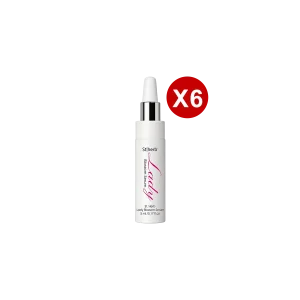
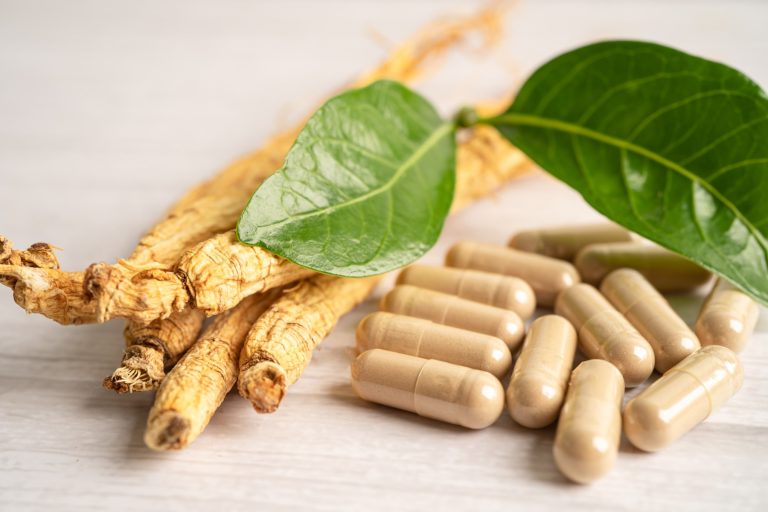
Pueraria mirifica is commonly formulated as standardized extracts, capsules, or powders to ensure consistent concentrations of miroestrol and isoflavones. Standardization is critical for reproducibility, efficacy, and safety, particularly given the compound’s potent bioactivity. That is the reason why, we choose P. mirifica as our main ingredient in supplements for enhancing and improve bust area. like our Stherb Breast Capsule (60 caps.)
Cosmetic applications
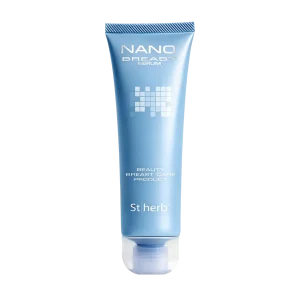
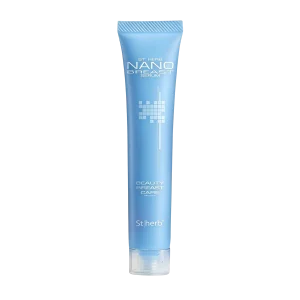
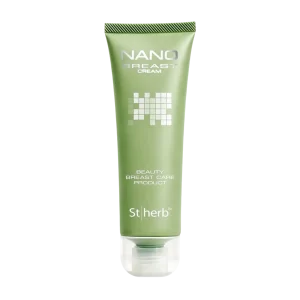
P. mirifica extracts are incorporated into formulations targeting skin aging, firmness, and hydration. Topical phytoestrogens may support collagen and elastin synthesis through estrogen receptor–mediated pathways, offering a botanical approach to age-related skin changes (Thornton, 2013). As all of benefits of P. mirifica, we also bring its generous benefits to our cosmetic product lines: Essential care, Nano series, or even the feminine care series.
Conclusion
Pueraria mirifica represents one of the most potent naturally occurring sources of phytoestrogens identified to date. Its unique chemical composition, particularly the presence of miroestrol and deoxymiroestrol, distinguishes it from other botanical estrogen sources and underpins its extensive investigation in women’s health, cosmetic science, and endocrine research. While traditional use and emerging scientific evidence support its potential benefits, responsible application and continued research remain essential to fully elucidate its therapeutic scope and long-term safety.
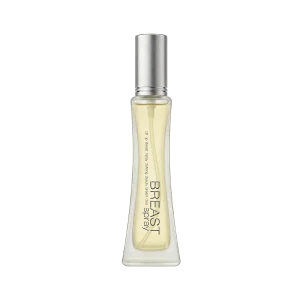
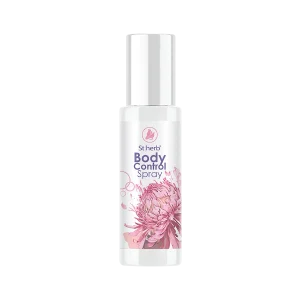
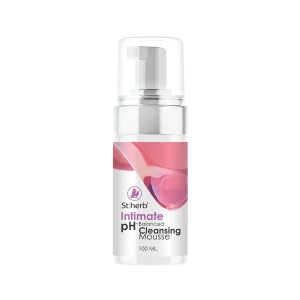
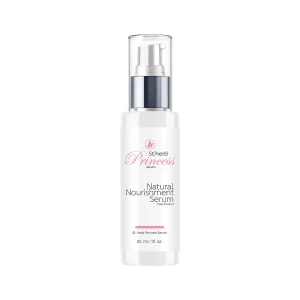
Our Recommended P. mirifica Products
References
Chansakaow, S., Ishikawa, T., Sekine, K., Okada, M., Higuchi, Y., Kudo, M., & Chaichantipyuth, C. (2000). Identification of deoxymiroestrol as the actual rejuvenating principle of Pueraria mirifica. Journal of Natural Products, 63(2), 173–175.
Dang, Z., Löwik, C. W. G. M., & Oliveira, M. (2011). Phytoestrogens and their effects on bone and breast tissue. Journal of Steroid Biochemistry and Molecular Biology, 127(1–2), 91–97.
Ishikawa, T., et al. (2001). Estrogenic substances of Pueraria mirifica. Planta Médica, 67(1), 61–67.
Malaivijitnond, S. (2012). Medical applications of Pueraria mirifica. Journal of Ethnopharmacology, 142(2), 321–328.
Mueller, S. O., et al. (2004). Phytoestrogens and estrogen receptor interactions. Toxicological Sciences, 80(1), 14–25.
Suthon, S., et al. (2016). Estrogenic effects of Pueraria mirifica. Journal of Ethnopharmacology, 193, 69–79.
Thornton, M. J. (2013). Estrogens and skin aging. Dermato-Endocrinology, 5(2), 264–270.
Zhou, Y. X., et al. (2014). Puerarin: A review of pharmacological effects. Phytotherapy Research, 28(7), 961–975.