How Pueraria mirifica Supports Skin Thickness and Structural Integrity
Healthy skin is not defined by surface appearance alone. Beneath smoothness, brightness, and elasticity lies a complex structural system composed of collagen fibers, elastin networks, extracellular matrix proteins, and water-binding molecules. Together, these elements determine skin thickness and structural integrity, two critical markers of youthful, resilient skin.
One of the most overlooked factors influencing these structures is hormonal signaling, particularly estrogen. As estrogen levels fluctuate and decline with age, especially during perimenopause and menopause, skin undergoes measurable structural changes. It becomes thinner, less elastic, and more vulnerable to damage.
This connection has led researchers and wellness practitioners to explore botanical compounds that may support estrogen-responsive skin structures naturally. Among these, Pueraria mirifica, a traditional Thai herb rich in phytoestrogens, has gained increasing attention.
Understanding Skin Thickness and Structural Integrity
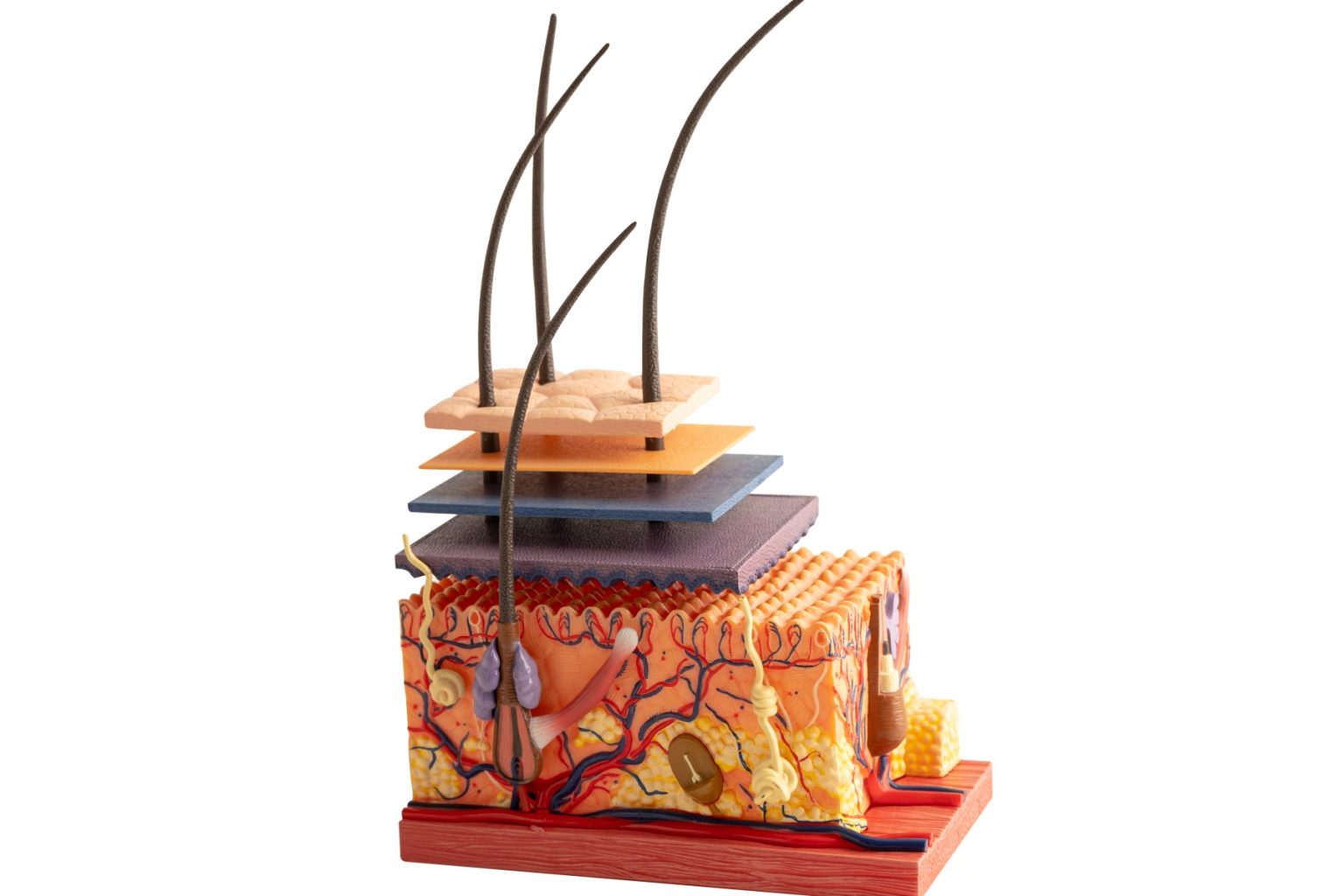
Skin thickness refers primarily to the health of the dermis, the middle layer of skin that provides strength, elasticity, and shock absorption. The dermis is rich in:
Collagen fibers, which provide tensile strength
Elastin fibers, which allow skin to stretch and return
Glycosaminoglycans (such as hyaluronic acid), which retain moisture
Fibroblasts, the cells responsible for producing structural proteins
Structural integrity describes how well these components are organized, supported, and maintained over time. When dermal structure weakens, skin becomes thinner, looser, and more prone to sagging and wrinkling, even if surface hydration appears adequate.
The Role of Estrogen in Skin Structure
Estrogen is a key regulator of dermal health. Scientific studies have shown that estrogen influences:
Collagen synthesis and density
Fibroblast activity
Skin thickness and elasticity
Blood flow to the skin
Wound healing and repair
Research indicates that women can lose up to 30% of dermal collagen within the first five years after menopause, highlighting how closely skin structure is tied to hormonal changes.
As estrogen signaling declines, fibroblasts slow their production of collagen and elastin, and the extracellular matrix becomes less organized. This leads to progressive thinning and loss of firmness.
Phytoestrogens: Gentle Modulators of Skin Health
Phytoestrogens are plant-derived compounds that can interact with estrogen receptors in the body. Unlike endogenous estrogen or synthetic hormone therapy, phytoestrogens are:
Weaker in potency
Receptor-selective
Modulatory rather than dominant
This allows them to support estrogen-responsive tissues without overwhelming the endocrine system. Pueraria mirifica is unique among phytoestrogen-containing plants because it contains miroestrol and deoxymiroestrol, compounds structurally similar to estradiol but biologically more adaptable.
How Pueraria mirifica Interacts with Skin at the Cellular Level
Skin cells, including fibroblasts and keratinocytes, express estrogen receptors, particularly estrogen receptor beta (ER-β). Activation of ER-β has been associated with:
Improved collagen organization
Anti-inflammatory signaling
Cellular protection
Reduced oxidative stress
Studies suggest that phytoestrogens from Pueraria mirifica preferentially interact with ER-β, supporting tissue maintenance rather than rapid cell proliferation. This receptor selectivity is especially important for long-term skin health, as it favors structural integrity and resilience over short-term stimulation.
Collagen Preservation and Dermal Density
Collagen is the primary protein responsible for skin thickness. Its production depends on fibroblast activity, which is influenced by estrogen signaling. By supporting estrogen receptor activity involved in collagen regulation, Pueraria mirifica may help:
Maintain dermal density
Slow collagen degradation
Support balanced collagen remodeling
While phytoestrogens do not “replace” estrogen, they may help maintain signaling pathways that preserve dermal structure as natural estrogen levels decline.
Skin Hydration and the Extracellular Matrix
Structural integrity is not only about fibers, but it also depends on the extracellular matrix, which binds water and supports tissue cushioning. Estrogen plays a role in regulating glycosaminoglycans such as hyaluronic acid. Reduced estrogen signaling can lead to dehydration at the dermal level, even if topical moisturizers are used. Through its estrogen-modulating activity, Pueraria mirifica may indirectly support deeper hydration and tissue suppleness from within.
Topical vs Internal Support for Skin Structure
Skin health strategies often focus on topical care alone. While topical products can support surface hydration and barrier function, structural changes occur at the cellular and hormonal level. Internal botanical support, such as phytoestrogens, works systemically, supporting fibroblasts, circulation, and hormonal signaling that influence dermal thickness over time. Many holistic routines combine internal and external approaches to address both surface appearance and underlying structure.
Safety and Responsible Use
Although Pueraria mirifica has a long history of traditional use, responsible application is essential. Considerations include:
Using standardized extracts
Following recommended dosages
Avoiding use in individuals with hormone-sensitive conditions without medical guidance
Phytoestrogens are biologically active and should be used thoughtfully as part of a broader wellness plan.
Why Skin Structure Matters More Than Surface Beauty
Modern skincare often emphasizes immediate cosmetic results, but true skin resilience comes from structural strength beneath the surface. Thickness, elasticity, and integrity determine how skin ages, not just how it looks today.
By supporting estrogen-responsive pathways involved in collagen production and tissue maintenance, Pueraria mirifica aligns with a long-term approach to skin health.
Conclusion
Skin thinning is not an inevitable consequence of aging. It is largely a reflection of changing hormonal communication within the body. As estrogen signaling declines, dermal structure weakens, leading to loss of thickness, firmness, and resilience. Pueraria mirifica offers a botanical approach to supporting these changes by gently interacting with estrogen receptors involved in tissue maintenance. Through its phytoestrogens, it may help preserve collagen structure, dermal density, and skin integrity over time.
Rebuild Your Skin’s Foundation
Restore dermal density and elasticity from within. Our Pueraria mirifica extract targets the structural root of skin aging.
Brincat, M. (2000). Hormone replacement therapy and the skin. Maturitas, 35(2), 107–117.
Thornton, M. J. (2013). Estrogens and aging skin. Dermato-Endocrinology, 5(2), 264–270.
Cherdshewasart, W., & Sriwatcharakul, S. (2007). Estrogenic activity of Pueraria mirifica extracts. Journal of Ethnopharmacology, 109(1), 8–14.
Kang, S. C., et al. (2017). Estrogenic activity of miroestrol and deoxymiroestrol. Phytomedicine, 25, 84–91.
Disclaimer: This article is for educational purposes only and is not medical advice. Consult a qualified healthcare professional before starting any supplement, especially if you are pregnant, nursing, taking medication, or have a medical condition.
SA
Supawat Arrakrattanakun
Stherb Editorial Team
The Stherb editorial team writes about Thai herbal science, women’s and men’s wellness, and the traditional botanicals behind our products.
Continue your wellness journey
Explore Stherb’s Thai herbal skincare and supplements, crafted from research-backed botanicals.
Quick answer Herbal supplement tolerance can develop when the body adapts to repeated exposure through mechanisms such as receptor downregulation, faster compound…
Quick answer Zinc and magnesium provide important nutritional support for hormone-related processes that herbal supplements depend on. Zinc is involved in testosterone…
·5 min read
Stay in the loop
Get the Journal in Your Inbox
Skincare rituals, herbal science and subscriber-only offers — a couple of times a month, no noise.