Breast Stories
Pueraria Mirifica Breast Cream, and Spray: How to Use Them
Cream, gel, serum, spray or massage oil: how Pueraria Mirifica topical formats differ and how to apply them correctly.

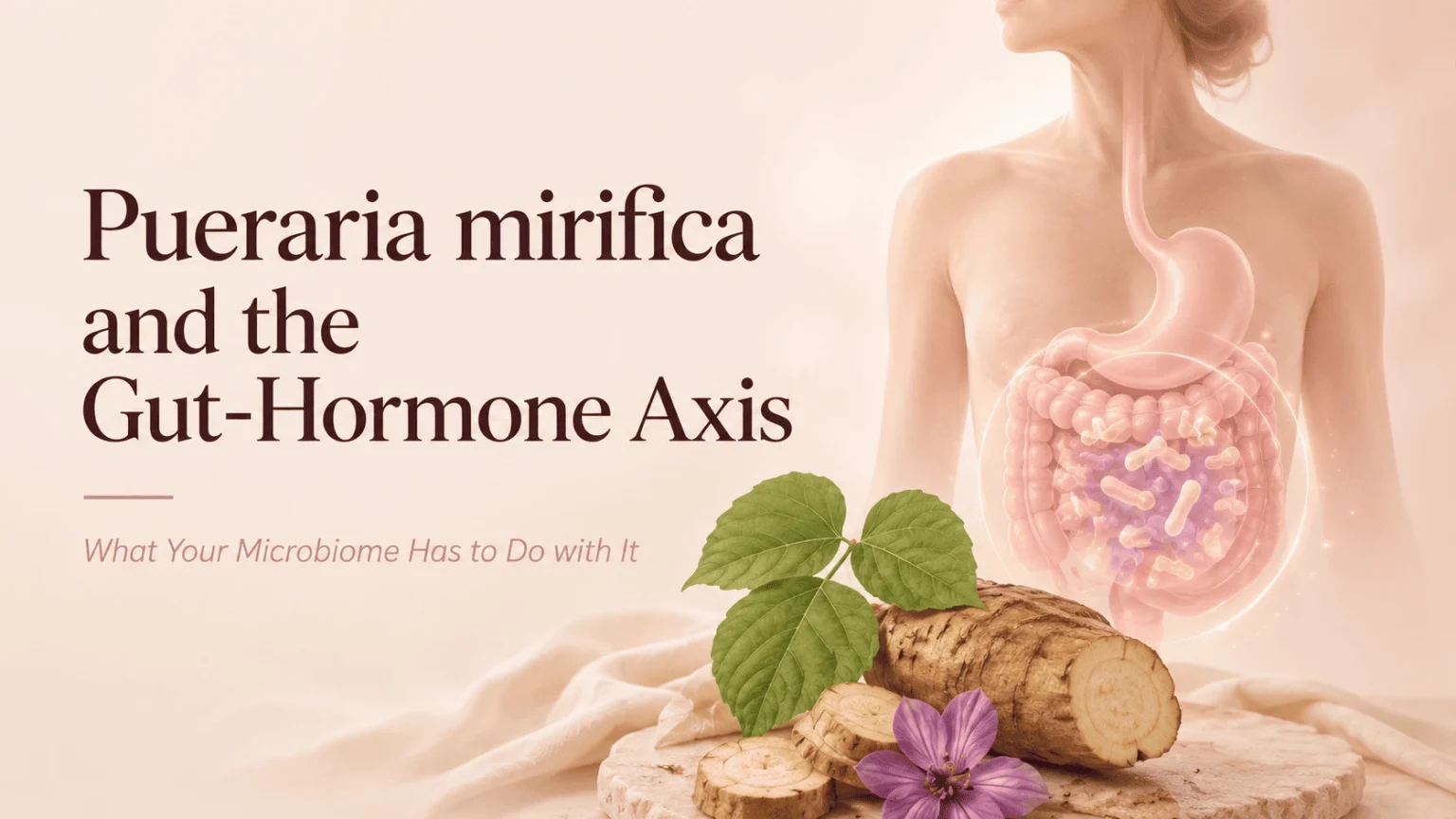
The gut microbiome plays a role in estrogen and phytoestrogen metabolism and may influence how some plant compounds are absorbed, transformed, or recycled in the body. Pueraria mirifica contains several estrogenic plant compounds, so differences in gut microbial activity may contribute to variation in how these compounds are metabolized. However, direct research linking specific gut microbiome profiles to Pueraria mirifica outcomes is still limited.
When most people start researching Pueraria mirifica, they zero in on its phytoestrogens and how those compounds interact with estrogen receptors. That makes sense. But there is an entire layer of biology happening before any of those receptor interactions take place, and it starts much earlier in the process, deep inside your digestive tract.
The connection between the gut microbiome and hormone metabolism is one of the more compelling areas in functional nutrition right now. The trillions of bacteria living in your gut do not just break down food and absorb nutrients. They actively process, activate, and in some cases deactivate the very phytoestrogenic compounds that make Pueraria mirifica work. If you have ever wondered why the same supplement affects people so differently, this gut-hormone relationship is a big part of the answer.
Buried within your intestinal microbiome is a specific community of bacteria that researchers now call the estrobolome. These bacteria produce an enzyme called beta-glucuronidase, and the amount of this enzyme your gut produces has a direct influence on how estrogens, including phytoestrogens, cycle through your body.
Here is how it works. Your liver processes hormonal compounds and packages them for removal through a process called conjugation, essentially attaching a chemical tag that signals the body to excrete them. These conjugated compounds travel to the gut. Once there, bacteria with high beta-glucuronidase activity can snip off that tag and release the estrogen back into circulation. When this recycling happens too aggressively, you end up with higher circulating estrogen levels than the liver originally intended.
This same mechanism applies directly to the phytoestrogens in Pueraria mirifica. The bacteria you carry in your gut can determine whether those compounds remain active, get reabsorbed, or simply pass through without doing much. Two people taking the identical supplement at the identical dose can experience noticeably different outcomes. A lot of that variation traces back to their individual microbiome composition.
Dysbiosis, which refers to an imbalanced or reduced-diversity microbiome, tends to skew the estrobolome in one of two unhelpful directions: either excessive reactivation of phytoestrogens or unusually rapid clearance. A diverse, well-fed microbiome processes these compounds more moderately, which aligns with more predictable and consistent results from supplementation over time.
Pueraria mirifica contains several phytoestrogenic isoflavones, with miroestrol and deoxymiroestrol being the most studied. These compounds have a structural resemblance to endogenous estrogens and bind preferentially to estrogen receptor beta, producing effects that are weaker but meaningful compared to the body’s own estrogens.
Before these compounds reach estrogen receptors anywhere in the body, many of them first encounter gut bacteria capable of converting them into more or less bioavailable forms. Many isoflavones exist in their glycoside form inside the plant, meaning they have a sugar molecule attached. Gut bacteria must break that bond through enzymatic activity before the active aglycone form can cross the intestinal wall and enter circulation. Without sufficient populations of these bacteria, a meaningful portion of the phytoestrogenic content in a supplement simply passes through unused.
Research on isoflavone metabolism has revealed striking variation between individuals. Some people produce a metabolite called equol through gut bacterial conversion, and equol has notably stronger estrogenic activity than the isoflavones it comes from. Others produce very little equol despite consuming the same amount of isoflavones. This difference is entirely microbial. Specific bacteria, particularly certain Lactobacillus strains, carry the enzymes needed for equol production. Equol producers consistently show stronger responses to isoflavone supplementation than non-producers in clinical studies.
The takeaway here is not that you need to become an equol producer to benefit from Pueraria mirifica. It is that your gut environment actively shapes your relationship with plant hormonal compounds, and paying attention to gut health is not separate from optimising your herbal supplement results. It is part of the same conversation.
You cannot directly observe your microbiome, but daily choices have a meaningful cumulative effect on it. A few strategies are well-supported for improving gut conditions in ways that benefit phytoestrogen metabolism specifically.
Dietary fibre is the most reliable starting point. Bacteria that handle phytoestrogen processing well tend to be the same bacteria that feed on fermentable fibre from vegetables, legumes, oats, and whole grains. When these bacteria are well-nourished, they proliferate and function more efficiently. A low-fibre, high-processed-food diet tends to reduce microbial diversity over time, which is the opposite of what you want when trying to get consistent results from herbal supplementation.
Fermented foods are a practical complement. Regular consumption of yoghurt, kefir, kimchi, miso, and similar foods introduces both beneficial bacteria and the short-chain fatty acids they produce. Observational research consistently links regular fermented food intake to greater microbial diversity, and diversity is generally the more useful metric compared to simply trying to increase one specific bacterial strain.
Antibiotic use deserves a mention here. A course of antibiotics can significantly deplete gut bacterial populations, and the disruption sometimes lingers for months. If you have recently finished antibiotics, it is reasonable to give your microbiome time to recover before expecting consistent herbal results. Probiotic supplementation during and after antibiotic treatment can support the rebuilding process, though it is worth choosing strains with specific research behind them rather than just picking the first product on the shelf.
Chronic psychological stress also alters gut motility and bacterial composition in ways that are easy to underestimate. The same hormonal stress response that drives cortisol up also affects gut function. Sleep, regular movement, and genuine downtime are gut health strategies as much as they are general wellness practices.
The relationship between pueraria mirifica, the gut microbiome, and hormone balance is not just a scientific curiosity. It is a practical reason why some people see strong, consistent results from this herb while others feel like it is barely working.
If your gut environment is compromised through poor diet, high stress, or recent antibiotic use, even a high-quality Pueraria mirifica supplement may underperform. But when you pair good herbal supplementation with a gut-supportive lifestyle, you give those phytoestrogens the best possible conditions to do their work. The gut is where the journey starts. Support it well, and the results downstream tend to reflect that investment.
Explore Stherb’s Thai herbal skincare and supplements, crafted from research-backed botanicals.
Cream, gel, serum, spray or massage oil: how Pueraria Mirifica topical formats differ and how to apply them correctly.
Key Takeaways Thailand’s botanical medicine tradition is one of the most systematically documented in the world — these herbs didn’t appear on…
Key Takeaways The decline is real but gradual: 1–2% total testosterone per year from around 35, with free testosterone falling faster because…