Origins
History of Pueraria Mirifica
From a Thai folk remedy called “Kwao Krua Kao” to a scientifically documented botanical, over nearly a century.

Ten in-depth guides on the Thai root behind St.Herb’s formulas — its botany and history, active compounds, published research, real-world results and how it’s used in a daily routine.
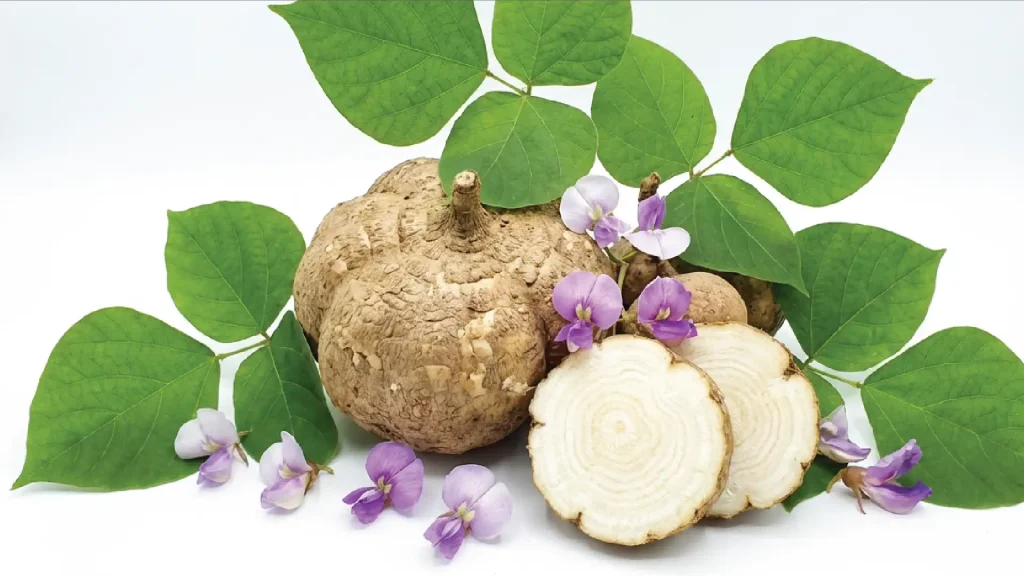
What Pueraria Mirifica is, where it grows, and why this one root — native to Thailand’s northern hills — became the foundation ingredient of St.Herb’s entire breast care line.
Read the guide →From a Thai folk remedy called “Kwao Krua Kao” to a scientifically documented botanical, over nearly a century.
How researchers and formulators have documented outcomes from consistent Pueraria Mirifica use over time.
Realistic timelines — what changes first, what takes longer, and what shapes the outcome for each person.
How phytoestrogens interact with breast tissue, and what “growth” realistically means in a topical or oral routine.
Miroestrol, deoxymiroestrol, isoflavones and coumestans — the compound profile that makes this root unique.
Capsule, cream or both — how each form is used, and how to build a simple daily routine around it.
A plain-language tour of the academic research into this root, from early isolation studies to modern trials.
The documented benefits of regular use, plus the safety considerations every user should know first.
What to look for in a quality Pueraria Mirifica capsule, how it works, and how it fits into a complete routine.
Quick, direct answers — the same ones our support team gives every day.
Pueraria Mirifica is a tuberous root native to northern and north-eastern Thailand, traditionally called “Kwao Krua Kao”. It is rich in phytoestrogens, including miroestrol and deoxymiroestrol, and has been used in Thai herbal tradition for decades to support skin, hair and breast tissue firmness.
No. Both contain phytoestrogens, but Pueraria Mirifica additionally contains miroestrol and deoxymiroestrol, compounds not found in soy, which are considered significantly more potent phytoestrogens.
The root is dried and milled into an extract that is formulated into capsules for internal use or creams and serums for topical application, often as part of a combined daily routine.
Yes. Thai and international researchers have studied its phytoestrogen content and effects since the 1930s, with renewed academic interest from the 1990s onward covering its composition, safety and physiological effects.
Used as directed, Pueraria Mirifica is generally well tolerated. As with any phytoestrogen-containing botanical, pregnant or breastfeeding women and anyone managing a hormone-sensitive condition should consult a healthcare provider before starting.
Content in this guide reflects traditional use and published research on Pueraria Mirifica; it is for general education, not medical advice, and does not describe FDA-evaluated claims. Individual results vary — consult a healthcare provider before starting any new supplement or topical regimen.
Shop the breast care collection built around this one Thai root — cream, capsule and care packages for every stage.