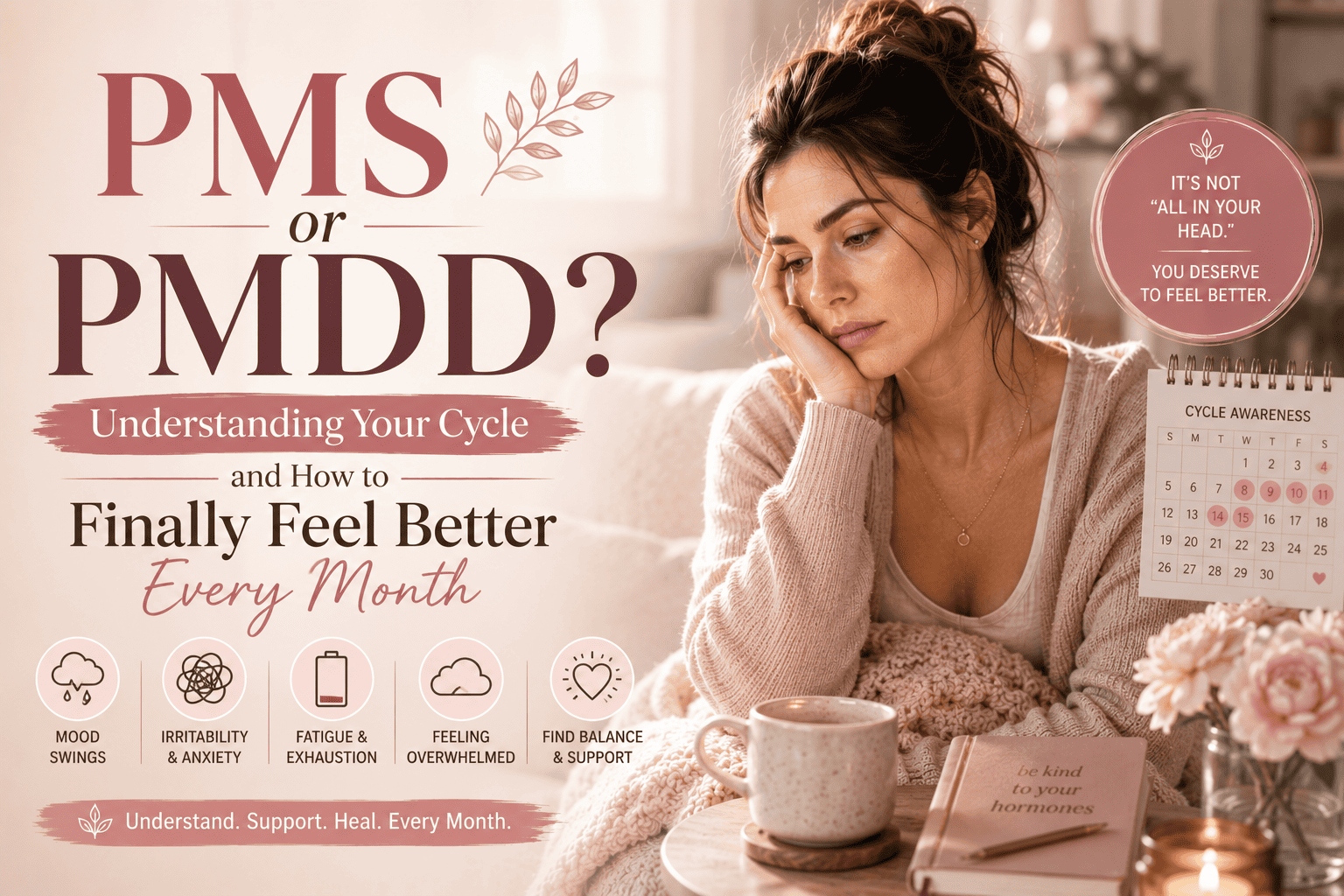
Premenstrual symptoms affect an estimated 75 to 80 percent of women at some point in their reproductive lives. Despite this prevalence, PMS is still widely treated as something to be endured — a minor inconvenience that is simply part of being a woman. The reality is that significant PMS, and particularly its clinical form called PMDD, can be genuinely debilitating.
When Your Period Is More Than Just Inconvenient
PMS affects relationships, professional performance, and overall quality of life in ways that deserve both acknowledgment and effective, targeted intervention. You are not being dramatic. Your symptoms are real, they have a hormonal explanation, and they can be addressed.
This article explains what is happening in your body during the premenstrual phase, how to distinguish PMS from PMDD, and which natural approaches have the strongest evidence for making your cycle a more manageable, predictable experience.
Defining the Spectrum: PMS vs PMDD
Both conditions occur in the luteal phase and resolve when menstruation begins — but they differ significantly in severity and impact. Understanding where you sit on this spectrum shapes everything about the right response.
- Bloating and breast tenderness
- Fatigue and food cravings
- Mild irritability and low mood
- Manageable — does not fully take over daily life
- Resolves within first few days of new cycle
- Intense depression and debilitating anxiety
- Rage that feels completely out of character
- Severe mood instability every single cycle
- In serious cases — thoughts of self-harm
- Significantly impairs relationships and work
The Hormonal Mechanism Behind PMS
Both PMS and PMDD are fundamentally hormonal in origin, though the mechanism is more nuanced than simply having too much or too little of any single hormone. Understanding which phase of your cycle drives symptoms is the key to addressing them precisely.
During the luteal phase, progesterone rises significantly after ovulation — then falls sharply as menstruation approaches. In women prone to PMS, this drop in progesterone, or a heightened sensitivity to the fluctuation itself, triggers the familiar cluster of symptoms.
The metabolism of progesterone produces a neurosteroid called allopregnanolone, which normally has a calming effect on GABA receptors in the brain. In women with PMDD, the brain appears to respond paradoxically — experiencing anxiety and irritability rather than calm during the very phase when the body is producing more of it.
Nutrition Strategies With the Strongest Evidence
What you eat during the two weeks before your period can have a significant and measurable impact on symptom severity. These nutritional approaches have the most clinical support.
Magnesium
Consistently shown in research to reduce bloating, mood symptoms, and breast tenderness. Magnesium Glycinate is the most bioavailable and well-tolerated form.
Vitamin B6
Supports progesterone production and has been shown in clinical trials to reduce irritability, anxiety, and mood symptoms in women with moderate to severe PMS.
Calcium
Supplemental calcium at approximately 1,200 mg daily has demonstrated meaningful reductions in overall PMS severity, particularly for mood and physical symptoms.
Reduce Sugar & Caffeine
Blood sugar instability amplifies mood swings in the luteal phase. Limiting caffeine and alcohol also worsens anxiety and sleep quality during this vulnerable phase.
Reducing sugar
blood sugar
instability amplifies mood swings and energy crashes in the luteal phase. Reducing refined sugars and simple carbohydrates during the premenstrual week produces noticeable improvements in many women within two to three cycles.
Limiting caffeine & alcohol
both worsen anxiety and breast tenderness, and alcohol significantly disrupts sleep quality during an already hormonally vulnerable phase of the cycle.
Movement and Mind-Body Practices
Exercise Across the Whole Cycle — Not Just When Symptoms Hit
Regular aerobic exercise throughout the entire cycle has consistent evidence for reducing PMS severity. It increases endorphin production, improves insulin sensitivity, and has a direct positive effect on serotonin regulation. Yoga and breathwork are particularly effective for the anxiety and irritability dimension — even 15 to 20 minutes of slow, mindful movement during the premenstrual phase can make a noticeable difference in mood stability and physical comfort.
Herbal Supplements With Clinical Support
Several herbal supplements have been studied specifically for PMS and PMDD with consistent and clinically meaningful results. These are not folk remedies — they have real trial data behind them.
Vitex Agnus-Castus (Chasteberry)
One of the most studied herbs for PMS, with multiple randomised trials showing benefits for mood symptoms, breast tenderness, and cycle regularity. Works by influencing dopamine pathways and supporting balanced progesterone activity in the luteal phase.
Evening Primrose Oil
Rich in gamma-linolenic acid, an anti-inflammatory fatty acid particularly helpful for physical symptoms including breast pain and bloating.
Magnesium Glycinate
Taken consistently across the full cycle — rather than only premenstrually — produces stronger results for both mood and physical symptoms. Think of it as foundational daily support, not emergency relief.
Saffron Extract
Emerging research shows genuine benefits for mood and depression in the premenstrual phase, with specific trials in PMDD showing significant symptom improvements over two to three cycles.
Pueraria mirifica
Is a traditional Thai herb containing phytoestrogens such as miroestrol and deoxymiroestrol. It is more commonly studied for menopausal support and hormone-related wellness rather than PMS specifically, but some women use it to support hormonal balance, breast discomfort, and mood changes linked to fluctuating estrogen levels. Because of its estrogen-like activity, it should be used carefully, especially by individuals with hormone-sensitive conditions or those taking hormonal medications.
Creating a Whole-Cycle Approach That Actually Works
One of the most important mindset shifts in managing PMS effectively is moving from a reactive to a proactive model. Trying to manage symptoms only in the days when they are at their worst is like trying to put out a fire that has already spread.
PMS is common, but common does not mean you are obligated to accept it as your normal every month. With the right hormonal understanding and appropriate natural support, many women transform their experience of their cycle from something they dread into something they manage with confidence.
Take Back Your Cycle with Stherb
Stherb's Cycle Support Collection combines Pueraria mirifica extracts formulated to address the hormonal root causes of PMS symptoms rather than simply masking them. Consistent daily use across the full cycle, not just premenstrually, delivers the most lasting results.
Explore Stherb Products →