Quick answer
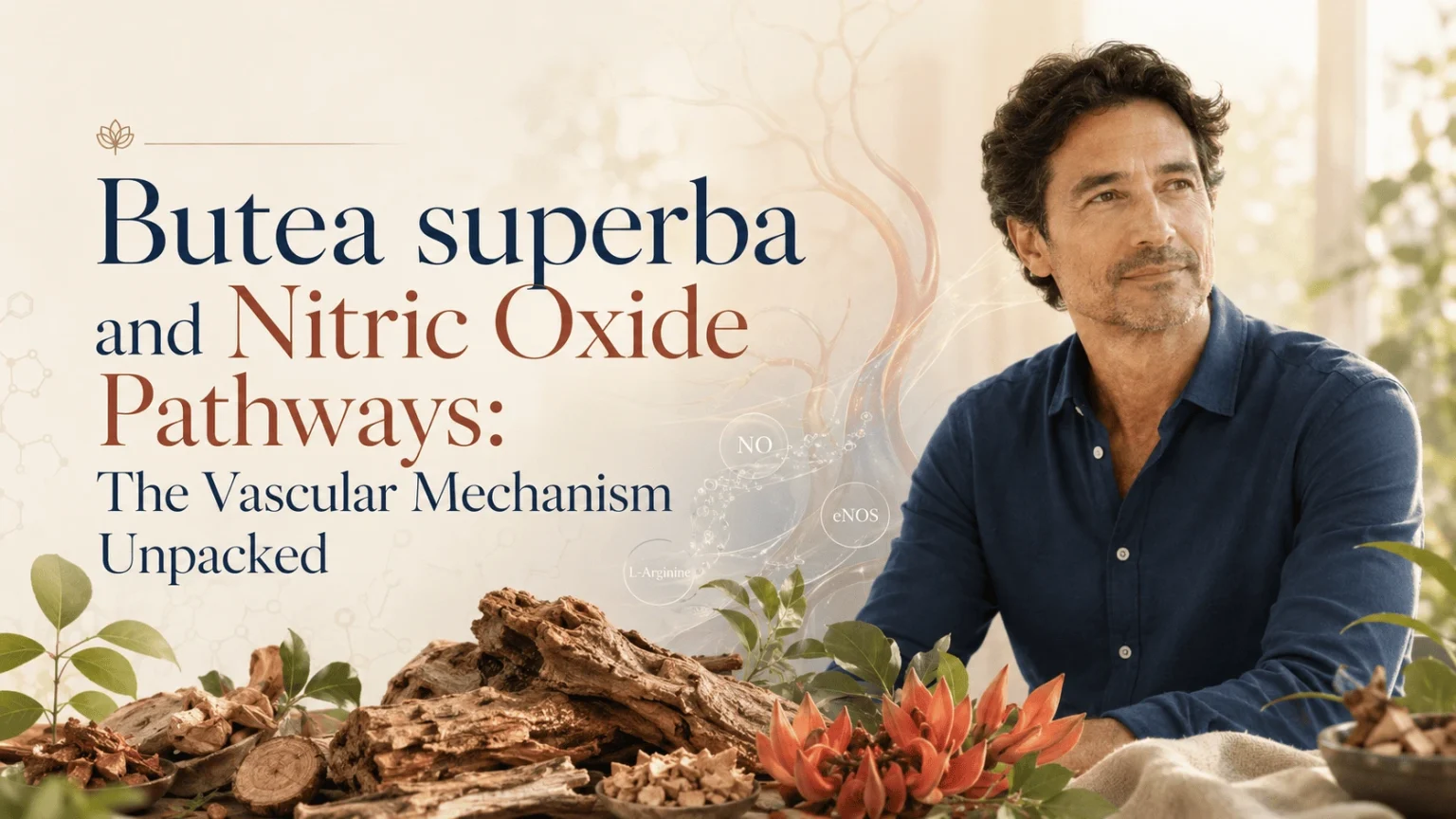
Butea superba may support vascular function by influencing the nitric oxide pathway,
which helps blood vessels relax and improves blood flow. Laboratory studies suggest
that the herb may support nitric oxide production and help cyclic GMP remain active
longer through PDE5 inhibition, although human evidence for these specific vascular
effects is still limited.
Key takeaways
-
Nitric oxide helps relax blood vessels and supports healthy circulation.
-
Butea superba may support nitric oxide signalling and vascular function through
multiple mechanisms.
-
Some compounds in Butea superba may inhibit PDE5, helping cyclic GMP remain
active longer.
-
The herb may also support nitric oxide production through endothelial nitric
oxide synthase activity.
-
Most evidence for these vascular mechanisms comes from laboratory and animal
research rather than human clinical trials.
Butea superba has a long history in Thai traditional medicine as a male vitality herb. Most of the popular conversation around it focuses on testosterone support, and that research is real and reasonably consistent. But there is another physiological mechanism that deserves more attention, one that explains a significant part of how this herb produces its effects: its interaction with nitric oxide pathways.
Nitric oxide is a signalling molecule produced by the cells lining blood vessels. It causes vascular smooth muscle to relax, which widens the blood vessels and increases blood flow. This is not a minor background process. Vascular tone and circulation affect tissue oxygenation, nutrient delivery, cardiovascular health, and yes, sexual function in both men and women. Understanding how Butea superba engages with nitric oxide pathways gives you a clearer picture of why it works and how to use it more effectively.
What Nitric Oxide Does in the Body
Nitric oxide, abbreviated as NO, is produced primarily by an enzyme called nitric oxide synthase, or NOS. There are three main isoforms of this enzyme, but endothelial nitric oxide synthase, the form found in blood vessel walls, is the one most relevant to Butea superba’s effects.
When endothelial cells produce nitric oxide, the molecule diffuses into the smooth muscle layer surrounding the blood vessel. There it activates an enzyme called guanylate cyclase, which produces cyclic GMP. Cyclic GMP then triggers a cascade that causes muscle fibres to relax. As the muscle relaxes, the vessel diameter increases, blood pressure drops locally, and blood flow through that vessel improves.
This vasodilatory mechanism is the same one targeted by many cardiovascular medications and by phosphodiesterase-5 inhibitors, which work by preventing the breakdown of cyclic GMP rather than increasing its production. The nitric oxide pathway is therefore not a peripheral curiosity but a central pillar of cardiovascular and sexual health physiology.
Adequate nitric oxide production depends on several factors: endothelial health, the availability of L-arginine as a substrate, cofactors like tetrahydrobiopterin, and antioxidant status, since oxidative stress degrades nitric oxide before it can exert its effects. This is why circulatory health is genuinely systemic and why herbs that support multiple points of this pathway can have meaningful impact.
How Butea superba Interacts with Nitric Oxide Signalling
Several studies have examined Butea superba’s interaction with the nitric oxide pathway, and the findings point toward a few distinct mechanisms operating simultaneously.
First, certain flavonoid compounds in Butea superba have been found to inhibit phosphodiesterase-5 enzyme activity in laboratory assays. Phosphodiesterase-5 is the enzyme responsible for breaking down cyclic GMP, the second messenger produced downstream of nitric oxide signalling. When this enzyme is inhibited, cyclic GMP accumulates and the smooth muscle relaxation effect is prolonged. This is essentially the same mechanism as pharmaceutical PDE5 inhibitors, though the compounds in Butea superba produce weaker effects and through somewhat different binding dynamics.
Second, Butea superba extracts have shown the ability to enhance endothelial nitric oxide synthase activity in cell studies, meaning they may support greater production of nitric oxide at the source rather than simply slowing its downstream breakdown. These two mechanisms together suggest a complementary approach to supporting vascular tone.
Third, the herb’s androgenic activity may contribute indirectly. Testosterone itself has vasodilatory properties and supports endothelial health in men. A herb that supports healthy testosterone levels through its effects on the hypothalamic-pituitary-testicular axis would therefore also support the hormonal conditions that favour good vascular nitric oxide production.
It is worth noting that most of the mechanistic research on Butea superba and nitric oxide has been conducted in cell cultures or animal models. The human clinical evidence for vascular effects specifically is less developed than the research on testosterone markers. But the mechanistic plausibility is strong, and the traditional uses of this herb in circulation-related contexts are consistent with these laboratory findings.
What This Means for Men’s Cardiovascular Wellness
The nitric oxide connection makes Butea superba relevant to a broader range of men’s health conversations than its typical testosterone-centric marketing suggests. Healthy vascular tone matters for cardiovascular function, exercise capacity, erectile health, and nutrient delivery to muscles and organs.
Men with risk factors for endothelial dysfunction, including high stress, sedentary habits, poor sleep, or elevated blood sugar, tend to have reduced nitric oxide bioavailability. Supporting the nitric oxide pathway through dietary and botanical means is a reasonable component of a cardiovascular wellness strategy, particularly for men in their 40s and beyond when endothelial function naturally begins to change.
From a dietary perspective, foods rich in nitrates, particularly dark leafy vegetables like spinach and rocket, provide substrates that the body can convert to nitric oxide through a pathway independent of NOS. Combining a nitrate-rich diet with a supplement that supports NOS activity and slows cyclic GMP breakdown creates multiple points of support along the same physiological chain.
Butea superba should not be positioned as a cardiovascular medication or a treatment for any condition. But within a comprehensive wellness approach that includes regular movement, stress management, and supportive nutrition, it represents a botanically interesting tool with genuine mechanistic grounding.
Understanding the Full Picture of Butea superba
Butea superba nitric oxide vascular interactions are a meaningful part of what this herb does, and they deserve a place in any honest discussion of how it works. The testosterone story is real, but it is not the whole story.
For men using Butea superba as part of their wellness routine, understanding both mechanisms allows for more informed decisions about when to use it, what lifestyle factors support its effects, and how to set realistic expectations. Herbs with multiple complementary mechanisms tend to produce results that feel more whole-body than single-pathway compounds, and Butea superba is a good example of that broader action at work.