Breast Stories
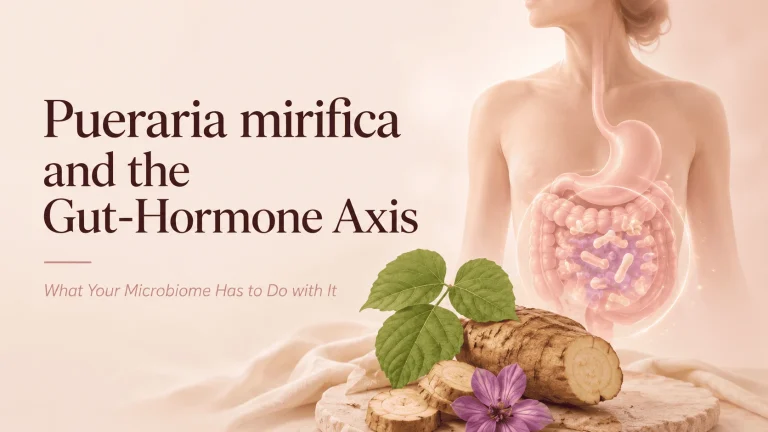
Pueraria mirifica and the Gut-Hormone Axis: What Your Microbiome Has to Do with It
Quick answer The gut microbiome plays a role in estrogen and phytoestrogen metabolism and may influence how some plant compounds are absorbed,…

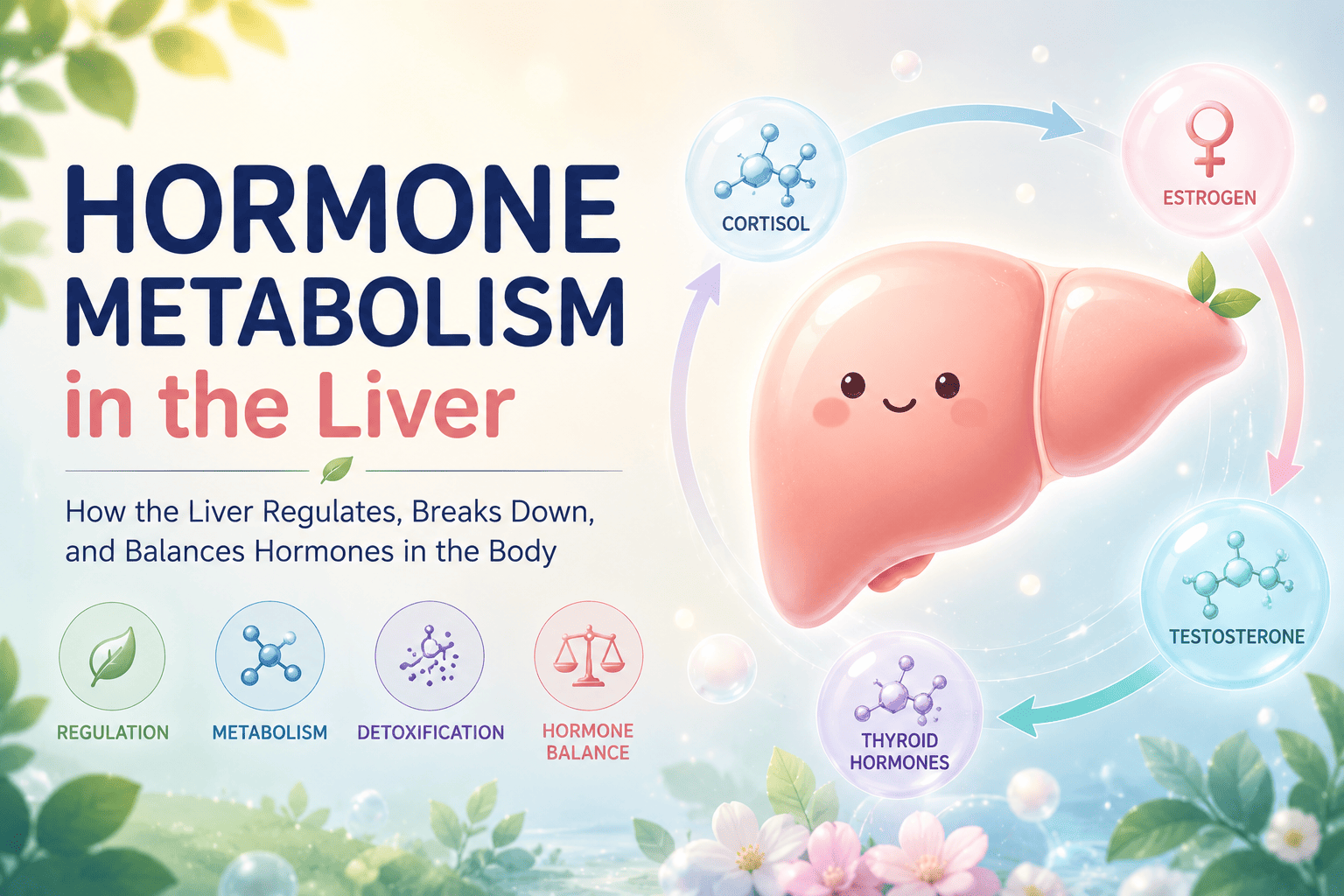
After hormones travel through the bloodstream and carry out their signaling functions, they need to be deactivated and eliminated. The liver is the primary site where this happens. It receives hormone compounds, transforms them through enzymatic reactions, and sends the metabolites onward — first to bile (via the gut) and then to the kidneys for final excretion.
For estrogen specifically, this metabolic process is particularly important. Estrogen comes in several forms within the body (estradiol, estrone, estriol), and after use, the liver converts them into metabolites through a two-phase process. If either phase is sluggish — due to nutritional deficiencies, alcohol, poor sleep, or environmental toxin overload — the process becomes less efficient.
This is not about "liver toxicity" in a dramatic sense. It is about the ordinary, continuous work of keeping hormone metabolism running smoothly. Everyday habits have a much larger impact on this system than most women realize.
Understanding the two-phase process helps demystify what "liver support" actually means in practice:
| Phase | What Happens | What It Needs |
|---|---|---|
| Phase I (Oxidation) | Cytochrome P450 enzymes transform estrogen into intermediate metabolites | B vitamins (B2, B3, B6, B12), magnesium, zinc, adequate protein |
| Phase II (Conjugation) | Intermediate metabolites are bound to other molecules to become water-soluble and excretable | Glutathione, glycine, taurine, sulfur compounds (from cruciferous vegetables) |
| Elimination | Conjugated metabolites move through bile into the gut, and via kidneys into urine | Adequate fiber, hydration, healthy gut microbiome, bowel regularity |
When Phase I runs faster than Phase II — a common scenario with poor nutrition or high toxin load — intermediate metabolites accumulate. Supporting both phases simultaneously is what a liver-friendly diet actually does.
The most liver-supportive dietary approach is not a detox kit or a juice cleanse. It is a consistent pattern of eating that provides the cofactors needed for both phases of metabolic processing:
| Nutrient / Food | Liver Support Role | Daily Sources |
|---|---|---|
| Protein (amino acids) | Enzyme synthesis, glutathione production | Eggs, fish, tofu, lentils, poultry |
| Cruciferous vegetables | Phase II conjugation support (DIM, I3C) | Broccoli, cabbage, kale, cauliflower |
| B vitamins (B2, B6, B12) | Phase I enzyme cofactors | Whole grains, meat, dairy, leafy greens |
| Dietary fiber | Elimination of conjugated estrogen via gut | Oats, chia, legumes, vegetables |
| Water (2+ liters) | Supports kidney excretion and bile flow | Plain water, herbal teas, hydrating foods |
| Antioxidants | Protect hepatocytes during Phase I oxidation | Berries, green tea, turmeric, beets |
A few common habits that quietly undermine liver-hormone processing — most people don't connect these dots:
The phrase gets used constantly in wellness marketing, and it means almost nothing without context. Hormonal balance isn't a target number or a state you reach with a supplement. It emerges from a body where production, metabolism, and elimination are all working reasonably well together.
No single herb, food, or product produces hormonal balance in isolation. What produces it is time — accumulated time of consistent input across multiple systems. That's a less exciting message than "take this capsule," but it's the accurate one.
That said, once the foundation is in place, some women find that adding traditional botanical support rounds out their routine in a way they can feel. That's where something like Pueraria mirifica becomes relevant — as an addition, not a shortcut.
Pueraria mirifica is a Thai root plant with a long history of use in traditional herbal medicine. St.Herb has built much of its women's wellness range around this botanical, which you can learn more about in depth on the Pueraria mirifica guide, including its history, composition, and research references. As with all botanical supplements, it is best used as a complement to — not a replacement for — healthy nutrition, liver-supportive habits, and appropriate medical guidance. Individuals who are pregnant, breastfeeding, or using hormone-related medications should consult a healthcare professional before use.
The liver processes used estrogen metabolites through two enzymatic phases, preparing them for excretion via bile and urine. When liver function is suboptimal, this processing slows, which can affect how hormone compounds circulate in the body.
Cruciferous vegetables (broccoli, kale, cauliflower), high-quality protein, B-vitamin-rich foods, dietary fiber, and antioxidant-rich foods collectively support both Phase I and Phase II liver detoxification pathways.
No. Liver detoxification is a continuous, normal biological process powered by enzymes and nutritional cofactors — not a periodic cleanse. The most effective "liver detox" is a consistently liver-supportive diet and lifestyle.
Pueraria mirifica is a traditional Thai botanical used in women's wellness contexts. It should be considered as a complementary option alongside lifestyle foundations — not as a standalone hormonal treatment. Always consult a healthcare professional if you have existing health conditions or are taking medications.
Most women notice improvements in energy, digestion, and skin clarity within 4–8 weeks of consistent liver-supportive eating and lifestyle habits. Hormonal patterns tend to shift more gradually over 2–3 menstrual cycles.
Discover St.Herb's Women's Care Collection and learn more about Pueraria mirifica as part of a holistic women's wellness approach.
Explore Stherb’s Thai herbal skincare and supplements, crafted from research-backed botanicals.
Quick answer The gut microbiome plays a role in estrogen and phytoestrogen metabolism and may influence how some plant compounds are absorbed,…
Key Takeaways Thailand’s botanical medicine tradition is one of the most systematically documented in the world — these herbs didn’t appear on…
Key Takeaways The decline is real but gradual: 1–2% total testosterone per year from around 35, with free testosterone falling faster because…