
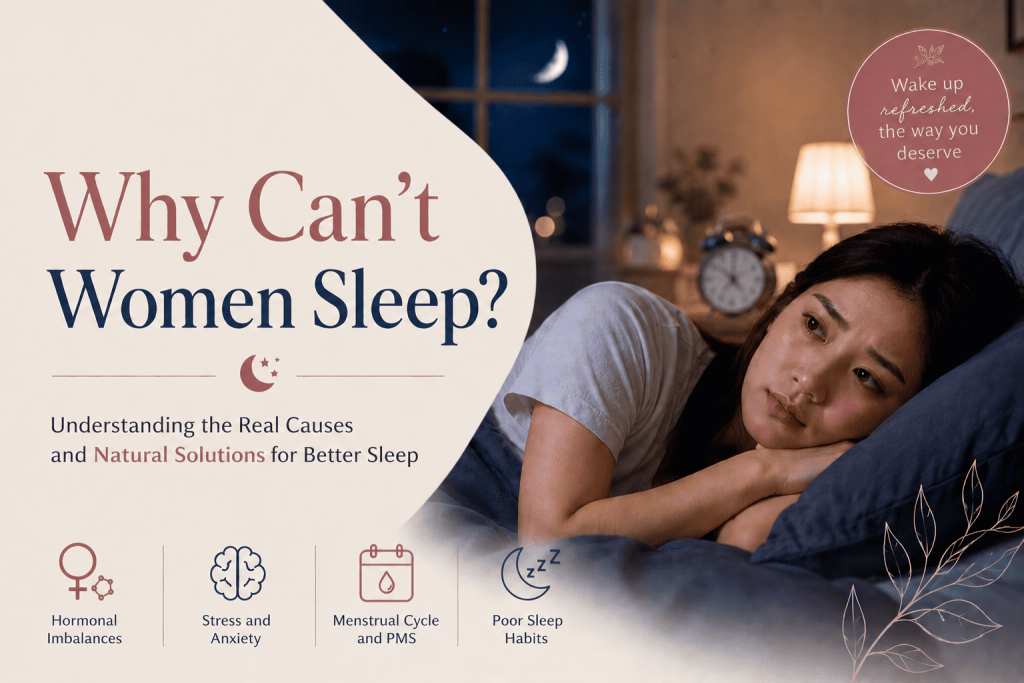
The Sleep Problem That Gets Misdiagnosed
Women are significantly more likely than men to experience insomnia — and the gap widens considerably from the late 30s onward. Research consistently shows that women report poorer sleep quality, more frequent waking, and greater daytime fatigue across most adult life stages. Yet the conversation around women's sleep tends to focus on generic advice: avoid screens before bed, keep a consistent schedule, reduce caffeine after noon.
While those recommendations have genuine merit, they miss the single most important driver of sleep disruption in women over 35 — which is hormonal fluctuation. Estrogen and progesterone are not just reproductive hormones. They are sleep-regulating hormones. When they fluctuate or decline, your sleep changes in ways that no amount of good sleep hygiene can fully compensate for without also addressing the hormonal dimension.
Understanding this connection does not mean you need to medicalise your sleep or immediately start hormone therapy. It means you can approach your sleep challenges with much greater precision — targeting the actual cause rather than endlessly adjusting habits that were never going to fix a hormonal problem.
How Estrogen and Progesterone Shape Your Sleep
Estrogen contributes to sleep quality through multiple pathways. It supports the brain's use of serotonin — a precursor to melatonin, which is the hormone responsible for signalling sleep onset. It assists with regulating core body temperature, which needs to fall by approximately one to two degrees to initiate and sustain deep sleep. It also promotes REM sleep: the restorative stage associated with memory consolidation and emotional processing.
Progesterone has a more direct sedative-like quality. It metabolises into a compound called allopregnanolone, which acts on GABA receptors in the brain — the same receptors targeted by certain sleep medications. When progesterone declines, particularly during perimenopause, many women describe losing their ability to sleep well as though a reliable mechanism has simply stopped working.
How Hormone Levels Affect Sleep Quality
Night Sweats, Hot Flashes & 3am Waking
One of the most disruptive sleep phenomena in perimenopausal women is vasomotor instability — the biological mechanism responsible for hot flashes and night sweats. As estrogen levels become erratic, the hypothalamus (the brain's thermostat) becomes hypersensitive to small fluctuations in body temperature.
At night, this response can pull a woman from deep sleep into full wakefulness — heart racing, body damp, sheets uncomfortable. Even without overt sweating, the vasomotor response creates brief arousals throughout the night that fragment sleep architecture significantly. The cumulative effects are serious:
Increased Cortisol
The following day's cortisol rises after fragmented sleep, creating a vicious cycle.
Impaired Immunity
Chronic sleep fragmentation reduces immune resilience and recovery speed.
Worsened Mood
Emotional regulation suffers significantly after nights of fragmented sleep.
Deeper Disruption
Hormonal imbalance perpetuates itself — poor sleep worsens the hormonal environment.
The Cortisol Connection: Wired But Tired
Cortisol follows a natural daily rhythm — highest in the early morning to drive alertness, falling gradually through the evening to allow sleep to begin. Chronic stress disrupts this rhythm, producing the wired-but-tired pattern that so many women in their 30s and 40s recognise: genuinely exhausted throughout the day, then suddenly alert and unable to settle as bedtime approaches.
Elevated evening cortisol suppresses melatonin production. The brain does not receive a clear sleep signal. The body maintains a low level of physiological alertness that makes it difficult to reach deep, restorative sleep stages — even when sleep eventually occurs. For women navigating both hormonal decline and chronic stress simultaneously, the sleep disruption can feel relentless because it genuinely is the result of multiple reinforcing factors.
Sleep Hygiene Reimagined for Hormonal Sleep
Standard sleep hygiene remains relevant, but when hormones are the primary driver, certain adaptations become especially important:
-
Keep your bedroom genuinely cool (18–20°C) Breathable bedding and airflow meaningfully reduce the frequency and discomfort of night sweats in perimenopausal women.
-
Morning bright light within 30 minutes of waking Natural light anchors your circadian rhythm and supports healthier melatonin timing at night. Dim indoor lighting from around 8pm.
-
Avoid alcohol entirely, or reduce significantly Alcohol disrupts sleep architecture in the second half of the night and noticeably worsens night sweats and anxiety — even one drink matters.
-
Fix your wake time, even on weekends A consistent morning wake time is the single most effective sleep hygiene intervention known. It builds sleep pressure systematically across the day.
Supplements with Evidence for Hormonal Sleep
Several supplements have meaningful clinical evidence specifically for the kind of sleep disruption caused by hormonal changes:
-
Magnesium Glycinate Well-tolerated and calming, with evidence for improving sleep onset time and deep sleep quality by supporting GABA receptor activity. Take 30–60 minutes before bed.
-
Ashwagandha KSM-66 Multiple clinical trials show improved sleep quality and measurably reduced cortisol in adults taking ashwagandha consistently — particularly effective for the cortisol-driven wired-but-tired pattern.
-
Pueraria mirifica Addresses the hormonal root cause of perimenopausal sleep disruption by modulating estrogen receptor activity and reducing vasomotor instability over time. Most effective as a consistent daily supplement.
-
L-Theanine An amino acid found in green tea that promotes relaxed alertness and has been shown to improve sleep quality without causing morning grogginess or dependence.
Making Sleep a Non-Negotiable Health Priority
There is a tendency in modern culture to treat sleep as something you negotiate with — something you sacrifice when life gets busy and recover from on weekends. This approach is particularly damaging for women navigating hormonal changes, because sleep is not simply rest. It is the primary window during which your body rebalances cortisol, consolidates memories, repairs tissue, and regenerates the hormonal environment for the following day.
Every night of poor sleep compounds the hormonal disruption of the night before. This is why women with hormonal sleep issues so often describe a downward spiral: the worse they sleep, the more anxious and hormonally disrupted they become, which makes the next night harder. Breaking that cycle requires treating sleep with the same intentionality and priority you would give any other critical health intervention.
Sleep is not a passive state. It is an active, essential process where your body heals, rebalances, and regenerates. When hormones disrupt this process, the effects extend into every area of your health. Protecting your sleep is one of the highest-return investments in your total wellbeing.
Begin by deciding that sleep is not negotiable. Set a consistent wind-down time. Create an environment that works for your body's specific challenges. Start your supplement support and give it two to three months to build. Most women who commit to this approach see meaningful improvements that extend well beyond sleep alone — into mood, skin, weight management, and overall hormonal balance.
Sleep Better and Balance Better
Stherb's Sleep and Hormone Support range combines Ashwagandha, Magnesium, and Pueraria mirifica in formulations designed to address the hormonal and cortisol-related drivers of poor sleep in women. Developed for consistent daily use as part of a long-term wellness foundation.
Explore Sleep Support →