If you have been feeling like a slightly different version of yourself lately — more tired, more emotional, or simply off in a way you cannot quite put your finger on — there is a good chance your estrogen is involved.
Why Estrogen Is the Hormone That Runs the Show
Estrogen is often called the master hormone in women's health, and not without reason. It governs far more than your menstrual cycle. It shapes your mood, your sleep quality, the texture of your skin, your energy levels, and even the strength of your bones.
The tricky part is that estrogen imbalance does not always announce itself loudly. It whispers. It shows up as a bad month that stretches into six months, or as skin that suddenly feels dull no matter how many products you layer on.
Understanding your estrogen is not about obsessing over hormone levels or running to a clinic every few months. It is about developing a working relationship with your own body so that when something shifts, you can recognise it, name it, and respond with care rather than confusion.
Produced primarily by the ovaries, estrogen works across virtually every system in the body. It stimulates collagen production to keep skin firm and elastic. It supports serotonin regulation, which stabilises your mood. It promotes bone density, cardiovascular health, and healthy sleep patterns. Estrogen imbalance can go in two directions: too much (estrogen dominance — heavy periods, bloating, mood swings) or too little (fatigue, dryness, sleep disruption). Both are more common than most women realise.
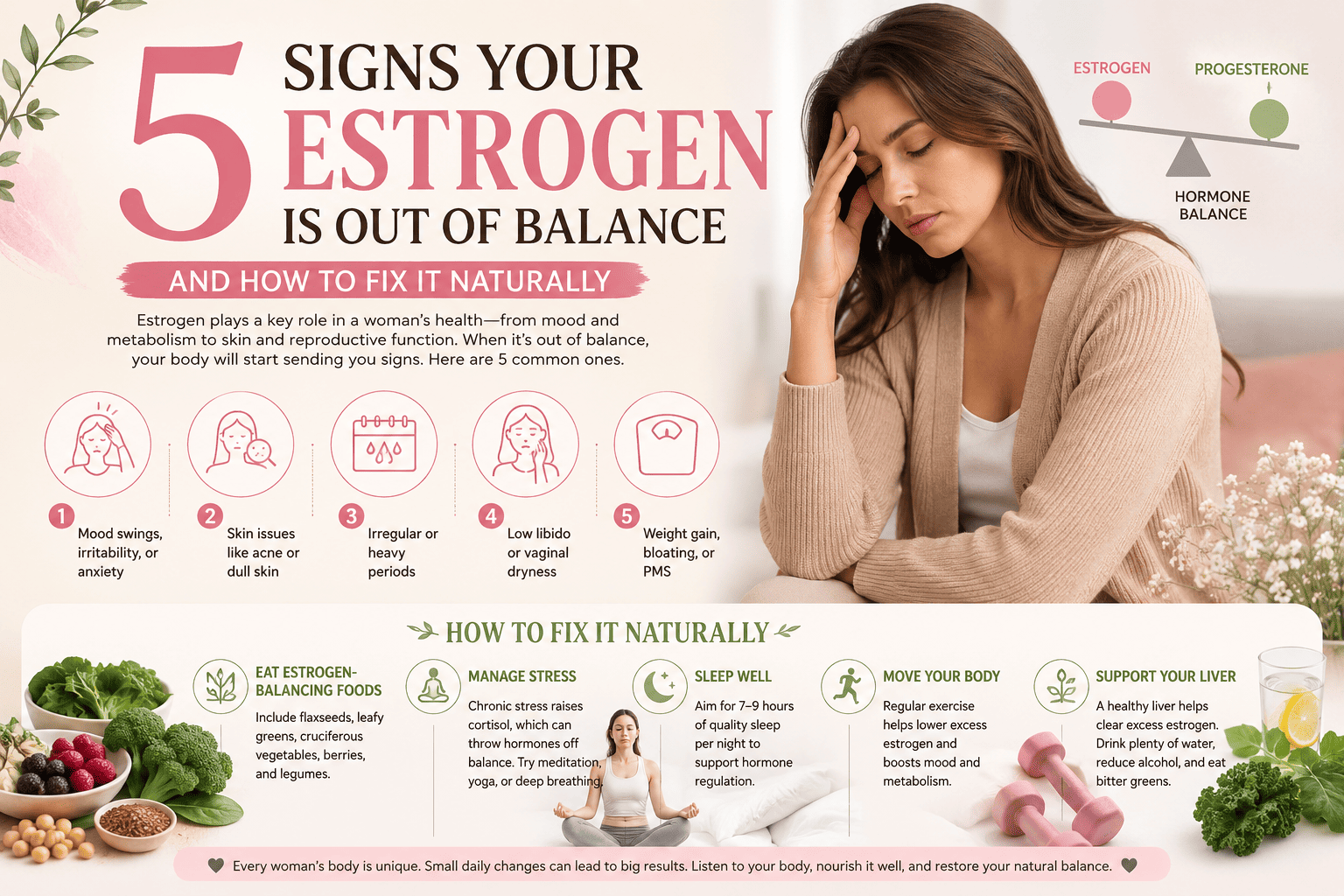
1 Unpredictable Mood Swings
If your emotional landscape feels like it has been replaced by a weather system you cannot predict, estrogen fluctuations may be at the root. Estrogen directly influences serotonin, the neurotransmitter most responsible for emotional stability.
This pattern is particularly noticeable in the week before your period or during the transition phase called perimenopause. If your mood shifts feel cyclical — tied to your body's rhythms rather than your circumstances — that is an important signal worth investigating.
Many women spend years managing mood symptoms with willpower, therapy, or medication without anyone connecting the dots back to estrogen. Addressing the hormonal dimension directly often produces changes that nothing else could achieve.
2 Persistent Skin Dryness and Dullness
Estrogen is one of the key drivers of collagen synthesis and skin hydration. It stimulates the fibroblast cells that produce collagen, supports hyaluronic acid levels in the skin, and helps regulate the skin's natural oil balance.
You might notice that your skin looks flatter, that fine lines appear more defined, or that it feels perpetually dry regardless of what you apply topically. No serum reaches deep enough to address what is happening at the cellular level when estrogen declines.
3 Disrupted Sleep
Poor sleep is one of the most commonly reported symptoms of estrogen imbalance. Estrogen plays a direct role in sleep regulation — supporting melatonin production and stable core body temperature through the night.
Women with low estrogen often describe waking frequently in the early hours. Night sweats, a racing heart, or unexplained anxiety can jolt them awake and make returning to sleep difficult.
4 Irregular or Changed Menstrual Cycles
Your menstrual cycle is one of the most reliable indicators of your hormonal health. Changes in cycle length, flow intensity, or predictability are often the first signals that estrogen levels are shifting.
Tracking your cycle consistently — even just noting the start date and general flow level each month — gives you valuable data that can reveal hormonal patterns early.
5 Unexplained Weight Gain Around the Belly
One of the most frustrating estrogen-related changes is the redistribution of body fat — particularly around the abdomen. As estrogen declines, fat tends to migrate from the hips and thighs toward the midsection.
This is not a willpower problem. It is a hormonal change that responds better to hormonal support than to calorie restriction alone.
Natural Ways to Restore Balance
There are meaningful, evidence-supported steps you can take to support healthier estrogen levels without immediately turning to pharmaceutical interventions.
Estrogen balance is not about achieving perfect levels. It is about creating the internal conditions where your body can regulate itself well.
Ready to Support Your Hormone Balance Naturally?
Stherb's Hormone Balance Collection is formulated with Pueraria mirifica and complementary botanical extracts to gently support estrogen balance in women at every stage of life.
Explore Stherb Products →