Vagina Stories
Estrogen and PMO: Understanding Hormonal Dynamics and Healthy Sexual Balance
Sexual health and hormonal balance are closely linked, but many people are unsure how specific behaviors, such as pornography use, masturbation, and…

Moisturizer or lubricant? What each does for vaginal dryness after menopause, what doctors can prescribe, and where herbal products fit, with the evidence.
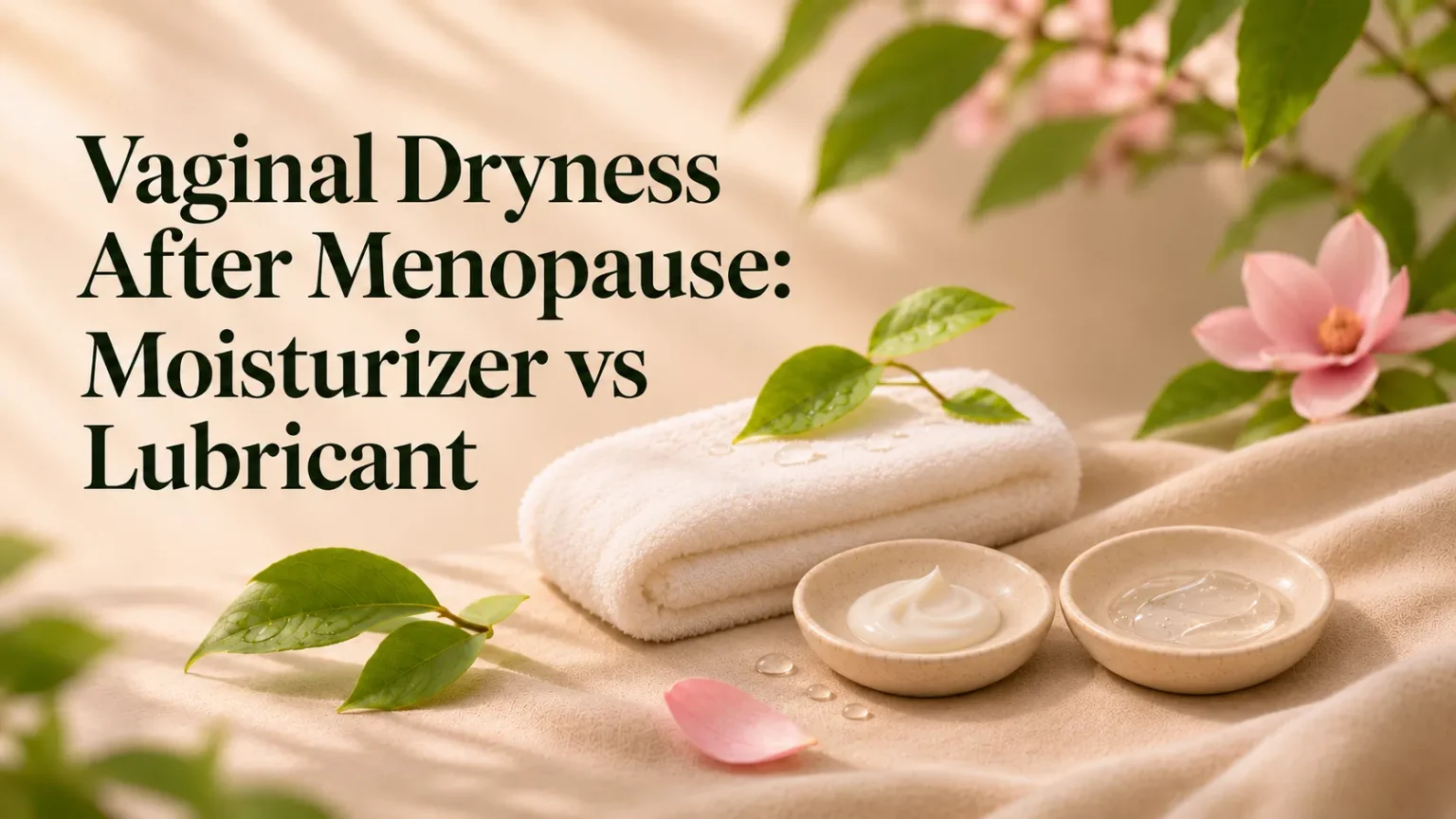
After menopause, a vaginal moisturizer is used regularly to keep tissue comfortable, while a lubricant is used just before sex to reduce friction. For dryness that persists, a doctor can prescribe low-dose vaginal estrogen or other medicines. Herbal products have limited evidence and are not a replacement for treatment.
After menopause, falling estrogen changes the tissues of the vagina and vulva, and the cluster of symptoms is called genitourinary syndrome of menopause. A NAMS paper reports that it affects approximately 27% to 84% of postmenopausal women. The NHS lists soreness, itching, pain or discomfort during sex, and unusual discharge, spotting or bleeding among the signs of vaginal dryness.
Menopause is not the only cause. The NHS also lists breastfeeding, cancer treatments such as chemotherapy, radiotherapy, hormonal therapy or surgery, and cleaning the vagina with perfumed soaps or washes as possible causes. That is one reason a persistent change is worth mentioning to a doctor rather than assuming it is only menopause.
Dryness often arrives alongside other changes. For the hot flushes and night sweats side of menopause, see Pueraria Mirifica and menopausal vasomotor symptoms.
They sound alike, but they do different jobs. The NAMS 2020 position statement names nonhormone lubricants used with sexual activity and long-acting vaginal moisturizers used regularly as first-line therapies for less severe symptoms. Mayo Clinic describes moisturizers as products put into the vagina or around the vulva every day or every few days, and lubricants as products used just before sex.
| Moisturizer | Lubricant | Prescription from a doctor | |
|---|---|---|---|
| How it works | Helps vaginal tissue hold moisture, much like a skin moisturizer | Reduces friction during sex | Low-dose vaginal estrogen, DHEA inserts and ospemifene act on the tissue itself |
| When to use it | Regularly, every day or every few days, whether or not you have sex | Just before sex | As prescribed, after a check-up |
| Forms | Gels and inserts used in or around the vagina | Water-based, silicone-based or oil-based | Creams, tablets, inserts and rings placed in the vagina, or a tablet taken by mouth |
| Often a first choice for | Mild symptoms, or when hormones are not an option | Pain or friction during sex | Moderate to severe symptoms, or when over-the-counter products do not help |
| Sources | Mayo Clinic | NAMS summary | Mayo Clinic | NAMS summary | NAMS position statement | Mayo Clinic |
Lubricants come in three main types: water-based, silicone-based and natural oil-based, according to the BC Medical Journal. The right one depends on what you are using it with, since condoms, sexual aids and toys, allergies, and a tendency toward yeast or bacterial vaginosis infections all affect the choice. If you are unsure, a pharmacist or doctor can help you pick.
If you are choosing between the two, a simple rule helps. Reach for a moisturizer if the discomfort is there day to day. Reach for a lubricant if the problem is mainly during sex. Plenty of women use both.
If over-the-counter products are not enough, there are prescription options. The NAMS 2020 position statement says low-dose vaginal estrogens, vaginal DHEA, systemic estrogen therapy and ospemifene are effective for moderate to severe symptoms. It also notes that endometrial safety has not been studied in clinical trials beyond 1 year, and that there are insufficient data to confirm the safety of vaginal estrogen, DHEA or ospemifene in women with breast cancer, so those women should plan with their oncologist.
For vaginal estrogen specifically, a Cochrane review of 30 randomized trials in 6,235 postmenopausal women found that vaginal estrogen preparations improve symptoms compared with placebo, although it rates the evidence as low quality. Mayo Clinic adds that oral ospemifene is not for people who have had breast cancer or are at high risk of it.
These are conversations for your doctor, who can weigh your health history. Nothing here is advice to start or stop a medicine.
Herbal products come last in this article on purpose, because their evidence is the thinnest. Here is what exists for Pueraria mirifica, the plant most studied for this. Every study below was in postmenopausal women, and every one is small.
Keep three cautions in mind. These trials tested specific research gels, not shop products, so do not assume results carry over to any product. Several come from one Thai research group, according to the 2022 paper. And herbal products are not among the effective options listed in the NAMS position statement. If a moisturizer or lubricant is not enough, the next step is your doctor, not another herbal product.
Pueraria mirifica has estrogen-like activity, so the usual cautions apply: ask a doctor first if you are pregnant or have a hormone-sensitive condition. For more on how it is used, see Pueraria Mirifica for menopause, vaginal dryness and bone health and our guide to Pueraria Mirifica and vaginal moisture.
St.Herb also sells intimate care products, including Lady Blossom Serum, Princess Serum and an Intimate pH Balanced Cleansing Mousse. They are not medical treatments and were not tested in the trials above. Follow the product label or ask your doctor.
After menopause the vaginal lining is thinner and more easily irritated. Doctors writing in the BC Medical Journal recommend avoiding glycerin, parabens, propylene glycol, fragrance, flavor and special “pleasure-enhancing” ingredients, and note that a silicone-based lubricant is generally less irritating and better tolerated if you do not use silicone toys.
The same article says the World Health Organization advises that a water-based lubricant should optimally not exceed 320 mOsm/kg of osmolality, with up to 1,200 mOsm/kg acceptable, while most common water-based products fall between 2,000 and 6,000. Labels rarely list osmolality, so ask a pharmacist or look for products that state it.
For a gentle everyday routine, see A Gentle Vaginal Healthcare Routine Guide.
See a GP or doctor if dryness affects your daily life, if you have unusual discharge, or if you have bleeding after sex, between periods or after menopause, according to the NHS. Any bleeding after menopause should always be reported, says an NHS Wales leaflet, because it can have causes other than dryness.
Also go back to your doctor if moisturizers and lubricants are not helping after a fair trial, or if you have had breast cancer and are unsure which options are safe for you. Pain that is severe or getting worse, sores, a fever, or burning when you pass urine are further reasons not to wait.
It can help to write down your symptoms before the appointment: when the dryness happens, whether sex is painful, what you have already tried, and any medicines or supplements you take, including herbal ones. A doctor can only account for what they know about.
A moisturizer is used regularly to keep vaginal tissue comfortable, while a lubricant is used just before sex to reduce friction, according to Mayo Clinic. Many women use both.
Yes. Mayo Clinic says lubricants can be used with vaginal moisturizers. The NHS also lists moisturizers and water-based lubricants among the things you can try yourself.
Yes. The North American Menopause Society lists low-dose vaginal estrogens, vaginal DHEA inserts and oral ospemifene as prescription therapies, so you would discuss them with your doctor.
Some small trials of a Pueraria mirifica gel in postmenopausal women reported improvements, such as a trial in 82 women. But a prescription estrogen cream performed better in that same trial, and herbal products are not among the options the NAMS position statement lists as effective. They are not a replacement for treatment.
Doctors writing in the BC Medical Journal suggest avoiding glycerin, parabens, propylene glycol, fragrance, flavor and “pleasure-enhancing” ingredients.
See a doctor if dryness affects daily life, if you have unusual discharge, or if you have bleeding after sex or after menopause, per the NHS.
Explore the product this article talks about — crafted from research-backed Thai botanicals.
Sexual health and hormonal balance are closely linked, but many people are unsure how specific behaviors, such as pornography use, masturbation, and…
As the year comes to a close, it is the perfect time to refresh your wellness routine and treat yourself to premium…
Pueraria mirifica, often called the “rejuvenating herb of Thailand”, has long been valued for its unique estrogen-like properties. While it is widely…