
The Complete Guide to Pueraria Mirifica: Science, Benefits, and Women’s Wellness
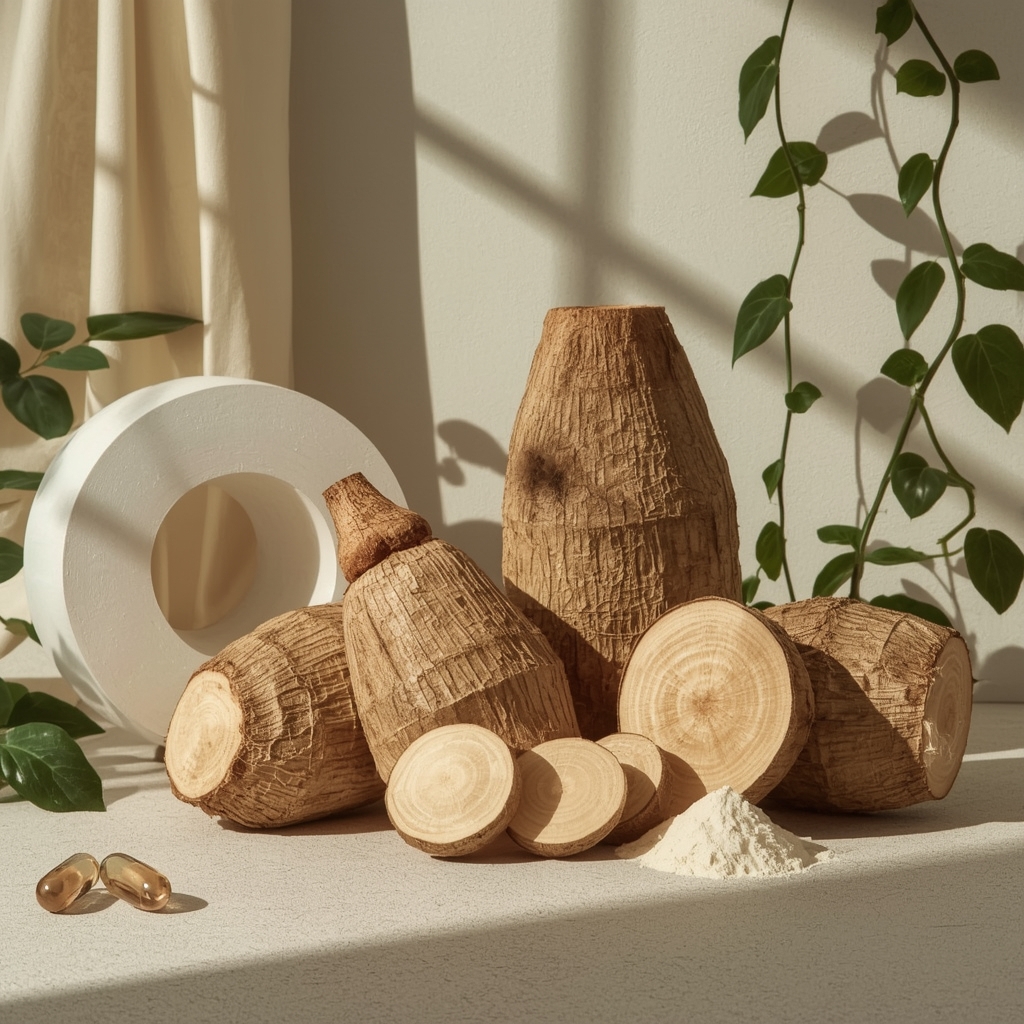
In the search for natural solutions that support women’s health, few botanical ingredients have gained as much attention as Pueraria mirifica. Native to Thailand, this traditional herb has been used for generations as a rejuvenating plant believed to support feminine vitality and hormonal balance.
Modern scientific research has begun to explain why this plant attracted such attention in traditional medicine. The root of Pueraria mirifica contains rare plant compounds called phytoestrogens, which can interact with estrogen receptors in the human body and influence processes linked to hormonal health, skin quality, and metabolic function (Malaivijitnond, 2012).
Because of these properties, Pueraria mirifica has become an increasingly valuable ingredient in women’s wellness supplements, anti-aging skincare, and menopause support formulas. Moreover, researchers continue to investigate its bioactive compounds and how they contribute to the herb’s reputation as one of the most powerful phytoestrogen sources found in nature.
The History and Traditional Use of Pueraria Mirifica

Pueraria mirifica is a perennial plant belonging to the legume family. It grows primarily in the forests of Southeast Asia, where its tuberous roots have been harvested for centuries. Traditional Thai herbal medicine often described the plant as a rejuvenating tonic for women, used to promote vitality and maintain feminine health.
Although these traditional uses were based on observation rather than modern biochemical research and evidence, later scientific investigations confirmed that the plant contains the chemical compound that acts as estrogen-like compounds, which are not commonly found in other botanical species.
The discovery of these compounds in the late twentieth century significantly expanded scientific interest in this herb. Researchers identified miroestrol and deoxymiroestrol, two highly active phytoestrogens that help explain the herb’s biological effects (Chansakaow et al., 2000).
Nowadays, Pueraria mirifica is recognized and well-known as a functional botanical ingredient in the nutraceutical and cosmetic industries, especially in products designed to support women’s hormonal and aesthetic wellness.
The biological effects of Pueraria mirifica are linked to a group of plant molecules known as phytoestrogens. These compounds share structural similarities with the human hormone estradiol, allowing them to interact with estrogen receptors located throughout the body.
Estrogen receptors like ERα and ERβ are present in many tissues, including the skin, bones, brain, and reproductive organs. When phytoestrogens bind to these receptors, they may influence biological pathways normally regulated by estrogen (Mueller et al., 2004).
The root of Pueraria mirifica contains a combination of phytoestrogenic compounds, but two stand out as particularly significant: miroestrol and deoxymiroestrol.
The Science Behind Pueraria Mirifica
Bioactive Compounds in Pueraria Mirifica

Miroestrol
Miroestrol is considered the primary active compound responsible for the plant’s estrogen-like activity. Chemically, it belongs to a class of compounds known as chromene derivatives. Its molecular structure closely resembles 17β-estradiol, the main estrogen hormone in humans.
Pueraria mrifica usually contains miroestrol in estimate amount of around 0.17%. However, with our farm and quality control, the miroestrol level in our Pueraria mirifica is mostly above the average, which leads to better results when adapting its extract as part of cosmetics or supplements.
Because of this structural similarity, miroestrol can bind to estrogen receptors and activate signaling pathways associated with estrogen activity. Laboratory studies have shown that miroestrol exhibits a relatively strong affinity for these receptors compared with many other phytoestrogens (Chansakaow et al., 2000).
This interaction may help explain why Pueraria mirifica has been studied for its role in supporting hormonal transitions and maintaining tissues influenced by estrogen.
Deoxymiroestrol
Deoxymiroestrol is closely related to miroestrol and is believed to act as its biosynthetic precursor. During plant processing or metabolic reactions, deoxymiroestrol can convert into miroestrol, contributing to the plant’s overall estrogenic activity.
Research suggests that deoxymiroestrol itself is also biologically active and may exhibit even stronger estrogenic effects in certain experimental conditions. The coexistence of both compounds gives Pueraria mirifica a distinctive phytoestrogen profile rarely found in other herbs.

Additional Supporting Compounds
While miroestrol and deoxymiroestrol receive most scientific attention, other compounds within the plant also contribute to its potential health effects.
Isoflavones such as genistein and daidzein are widely studied phytoestrogens known for their antioxidant properties and their ability to interact with estrogen receptors. These compounds have been investigated for their role in bone health and cardiovascular support (Setchell & Clerici, 2010).
Another compound present in the plant is puerarin, which has been studied for its anti-inflammatory and vascular effects. Although puerarin is more abundant in the related species Pueraria lobata, its presence in Pueraria mirifica contributes to the herb’s broader pharmacological profile (Zhou et al., 2014). Together, these compounds create a complex botanical synergy, meaning the plant’s effects arise from the interaction of multiple molecules rather than a single active ingredient.
Pueraria Mirifica Benefits for Women
Pueraria mirifica is widely studied for its potential role in supporting women’s health because its phytoestrogen compounds interact with estrogen receptors. Estrogen regulates many physiological processes, including bone density, skin elasticity, hair growth, reproductive tissue function, and lipid metabolism.
As estrogen levels fluctuate throughout a woman’s life, particularly during menopause, researchers have investigated phytoestrogen-rich plants as potential supportive botanical ingredients. Many studies suggest that compounds found in Pueraria mirifica may influence estrogen-dependent pathways involved in menopausal symptoms, bone metabolism, and skin physiology (Manonai et al., 2007).
Hormonal Balance Support
One of the most commonly discussed benefits of Pueraria mirifica is its potential role in supporting hormonal balance. Estrogen levels fluctuate throughout a woman’s life, particularly during periods such as puberty, pregnancy, and menopause.
Phytoestrogens may act as selective estrogen receptor modulators, meaning they can produce mild estrogen-like activity when natural estrogen levels decline. This property has made phytoestrogen-rich plants an area of interest for researchers studying natural approaches to hormonal support.
Appearance and Skin Health
Estrogen also plays a crucial role in maintaining the structural integrity of the skin. It helps regulate collagen production, skin hydration, and connective tissue elasticity. As estrogen levels decrease with age, the skin may become thinner and less elastic.
For this reason, phytoestrogen-containing botanicals such as Pueraria mirifica have attracted attention in the cosmetic industry. Extracts from the root of the plant are increasingly incorporated into skincare products designed to support skin firmness, hydration, and anti-aging effects (Thornton, 2013).
Because estrogen signaling also influences fat distribution and connective tissue structure, phytoestrogenic herbs are sometimes discussed in relation to feminine body contours and breast tissue support, although further clinical research is still ongoing.
Pueraria Mirifica for Breast Firmness and Feminine Confidence
Maintaining breast firmness and shape is influenced by several factors, including skin elasticity, connective tissue strength, and hormonal balance. As women age or experience hormonal changesม especially during menopauseม many notice changes in skin texture and tissue firmness around the chest area. Because estrogen plays an important role in maintaining these tissues, researchers have long been interested in botanical ingredients that can support estrogen-related pathways.
Among these compounds, miroestrol and deoxymiroestrol are considered particularly distinctive. Their structure is similar to the human hormone estradiol, allowing them to interact with estrogen receptors found in several tissues, including skin and connective tissue (Chansakaow et al., 2000; Mueller et al., 2004). Because estrogen signaling influences collagen production, fat distribution, and tissue elasticity, phytoestrogen-rich plants such as Pueraria mirifica have become increasingly popular in breast care supplements and cosmetic formulations.
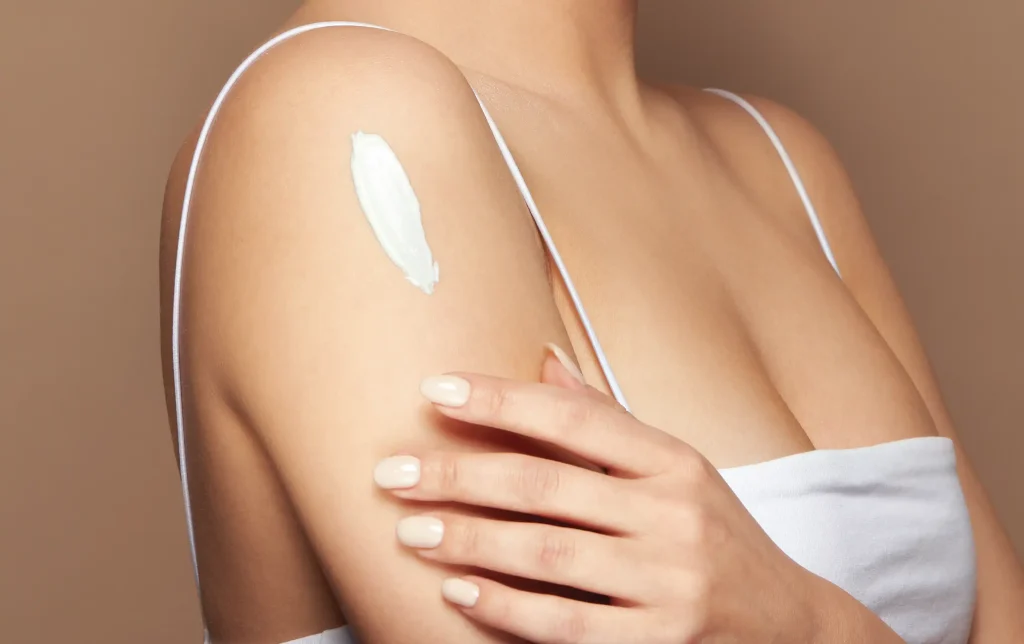
In the beauty and wellness industry, extracts of Pueraria mirifica are commonly included in products designed to support breast firmness, skin elasticity, and feminine contour. These formulations typically aim to support the skin and connective tissues surrounding the breast area, helping maintain a smoother and firmer appearance over time.
“Our Stherb Breast Cream features carefully sourced Pueraria mirifica extract, developed to support skin elasticity and feminine contour. Designed for daily use, it helps complement your beauty routine while supporting confidence and self-care.”
Hair growth is closely influenced by hormonal signaling, particularly the balance between estrogen and androgens. Estrogen has been shown to affect the hair growth cycle by prolonging the anagen phase, the active growth stage of hair follicles. When estrogen levels decline, such as during menopause, many women experience hair thinning, reduced hair density, or slower hair growth.
Phytoestrogens found in Pueraria mirifica, particularly miroestrol and deoxymiroestrol, may interact with estrogen receptors located in skin and hair follicle tissues. Through this receptor interaction, these compounds may influence biological pathways related to hair follicle regulation and scalp physiology.
Research suggests that estrogen signaling plays an important role in maintaining the hair growth cycle by regulating follicular cell proliferation and reducing follicle miniaturization (Thornton, 2013). Because phytoestrogens can mimic certain estrogen-related pathways, botanical extracts containing these compounds have been explored for their potential role in supporting scalp and hair health.
Hair Growth and Scalp Health

Pueraria Mirifica and Menopause Support

The most widely researched application of Pueraria mirifica relates to menopausal health. Menopause is characterized by a decline in estrogen production, which can lead to symptoms such as hot flashes, sleep disturbances, and changes in skin and bone health.
Several studies have explored the potential of Pueraria mirifica as a botanical option for menopausal support, suggesting that its phytoestrogen compounds may interact with estrogen receptors and help moderate symptoms associated with estrogen decline (Malaivijitnond et al., 2004).
Although phytoestrogens are not equivalent to hormone replacement therapy, they are often considered a milder plant-based alternative for individuals seeking natural wellness approaches.
Conclusion
Pueraria mirifica represents a fascinating example of how traditional botanical knowledge can intersect with modern scientific research. Its unique combination of phytoestrogenic compounds, particularly miroestrol and deoxymiroestrol, distinguishes it from most other herbal ingredients.
From supporting hormonal transitions to its potential role in skin health and menopausal wellness, this plant continues to attract attention from researchers, cosmetic scientists, and wellness experts.
As scientific studies continue to explore its biological mechanisms, Pueraria mirifica remains one of the most intriguing herbs in the field of natural women’s health and cosmetic science.
Frequently Asked Questions
Pueraria mirifica is commonly used in supplements and cosmetic products designed to support hormonal balance, menopausal wellness, skin health, and overall female vitality.
Pueraria mirifica does not contain human estrogen but contains phytoestrogens, plant compounds that can interact with estrogen receptors and produce mild estrogen-like effects.
Research suggests that the phytoestrogen compounds in the herb may help support women during menopause by interacting with estrogen pathways and helping moderate symptoms related to estrogen decline.
Yes. Due to its phytoestrogen content, the plant is sometimes used in anti-aging skincare formulations aimed at supporting collagen production and skin elasticity.
As with any herbal supplement, safety depends on dosage, product quality, and individual health conditions. Consultation with healthcare professionals is recommended before use.
Some research suggests that phytoestrogens may influence hair follicle biology because estrogen signaling helps regulate the hair growth cycle. Compounds found in Pueraria mirifica, such as miroestrol and isoflavones, may interact with estrogen receptors in skin and hair follicles. While more research is needed, these properties have led to interest in the plant as a potential ingredient in scalp and hair health formulations.
No. While soy contains isoflavones such as genistein and daidzein, Pueraria mirifica also contains chromene-type phytoestrogens not typically found in soy.
References
Chansakaow, S., Ishikawa, T., Sekine, K., Okada, M., Higuchi, Y., Kudo, M., & Chaichantipyuth, C. (2000). Identification of deoxymiroestrol as the rejuvenating principle of Pueraria mirifica. Journal of Natural Products.
Malaivijitnond, S. (2012). Medical applications of Pueraria mirifica. Journal of Ethnopharmacology.
Mueller, S. O., Simon, S., Chae, K., Metzler, M., & Korach, K. S. (2004). Phytoestrogens and their metabolites interaction with estrogen receptors. Toxicological Sciences.
Setchell, K. D., & Clerici, C. (2010). Equol: biological significance and metabolism. Journal of Nutrition.
Thornton, M. J. (2013). Estrogens and aging skin. Dermato-Endocrinology.
Zhou, Y. X., et al. (2014). Pharmacological effects of puerarin. Phytotherapy Research.
Thornton, M. J. (2013). Estrogens and aging skin and hair. Dermato-Endocrinology.