Quick answer
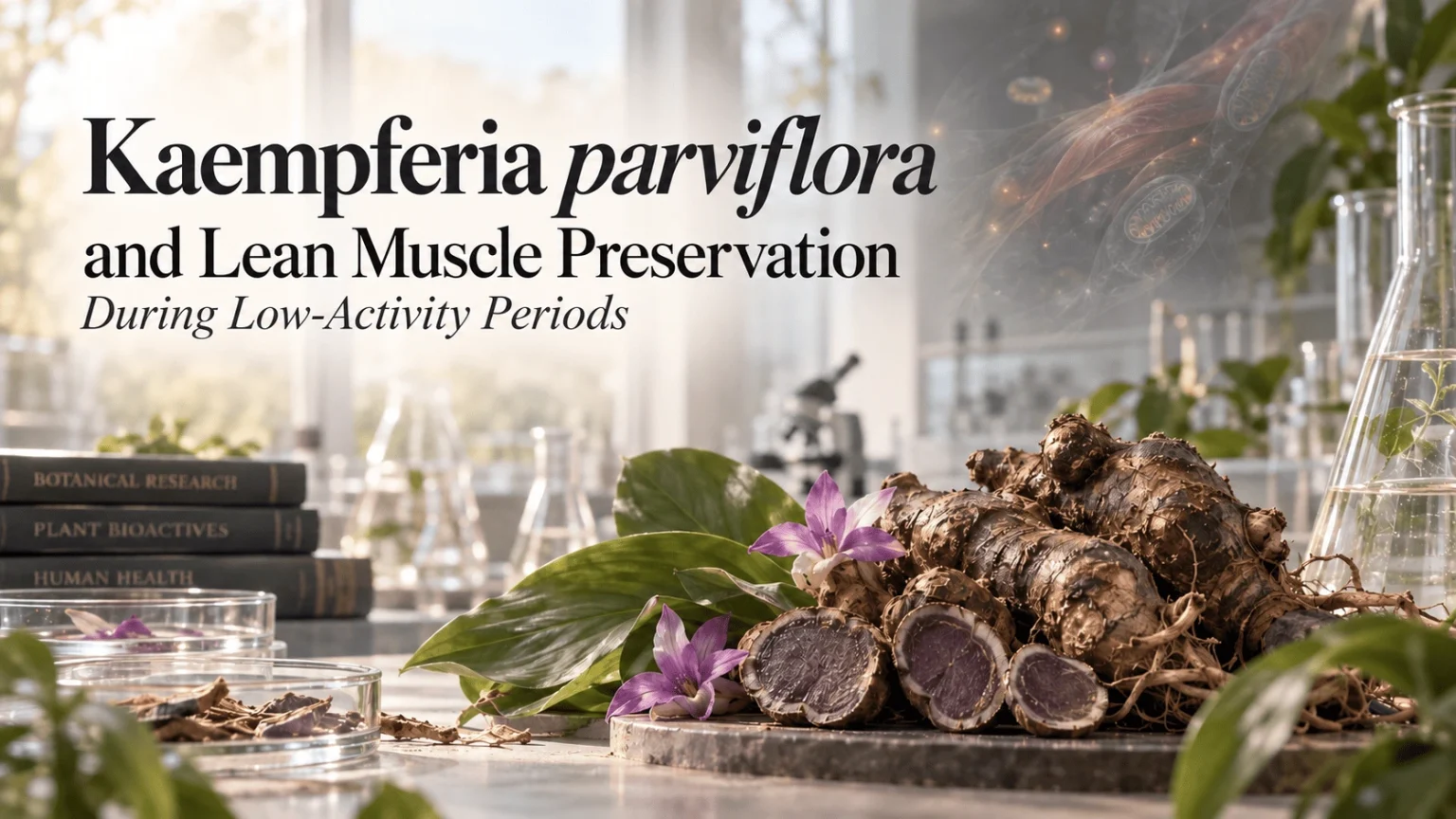
Kaempferia parviflora may be relevant to lean muscle preservation during
low-activity periods because its polymethoxyflavones have been studied for
effects on PGC-1 alpha expression, mitochondrial function, and inflammation.
Human evidence specifically for muscle preservation during inactivity is still
limited, so it is best understood as a support strategy alongside adequate
protein intake and appropriate physical activity when possible.
Key takeaways
-
Reduced activity can lead to disuse atrophy as muscle protein breakdown
begins to exceed muscle protein synthesis.
-
Animal research has linked Kaempferia parviflora with increased PGC-1 alpha
expression and mitochondrial activity in skeletal muscle.
-
Its anti-inflammatory activity may provide an additional mechanism relevant
to limiting disuse-related muscle loss.
-
Human research specifically on Kaempferia parviflora for muscle preservation
during low-activity periods is still emerging.
-
Adequate protein intake and appropriate activity remain important foundations
for maintaining lean muscle mass.
Building
muscle takes sustained effort over months. Maintaining it during periods when
training intensity drops or life gets in the way is a different and equally
important challenge. Injuries, travel, illness, work demands, or simply taking
a planned deload can all result in weeks or months of reduced physical
activity. During those periods, the body does not hold onto muscle tissue as
readily as it does when training stimulus is high.
Kaempferia
parviflora, the Thai black ginger, has been accumulating research interest not
just for its energy and metabolic effects but for its potential to support
muscle preservation during periods of reduced activity. The mechanisms behind
this are connected to its well-documented effects on mitochondrial function,
anti-inflammatory activity, and metabolic regulation. For anyone who trains
seriously and wants to protect what they have built during inevitable
low-activity periods, this herb is worth understanding.
Why Muscles Are Lost During Inactivity
Skeletal
muscle is metabolically expensive tissue. The body maintains muscle mass
primarily because the mechanical stress of regular exercise signals that it is
needed. When that stimulus disappears, the body begins a process called disuse
atrophy, where protein breakdown in muscle exceeds protein synthesis and muscle
mass gradually declines.
The cellular
signals governing this process include a reduction in mTOR pathway activity,
which drives protein synthesis, and an increase in the expression of atrogenes,
genes that encode ubiquitin ligases responsible for tagging muscle proteins for
degradation. In plain terms, muscles start to be dismantled because the body
has stopped receiving the signal that they are necessary.
Inflammation
plays a role in accelerating atrophy. Acute injury-related inflammation is a
necessary part of healing, but elevated systemic inflammatory markers are
associated with faster muscle mass loss during inactivity in both older adults
and in healthy individuals on prolonged bed rest. This is one reason why the
anti-inflammatory approach to muscle maintenance during inactivity has genuine
mechanistic logic behind it.
Mitochondrial
health is also relevant. Mitochondria in muscle cells are required for energy
production and play a role in signalling pathways that govern muscle protein
turnover. During disuse, mitochondrial function declines alongside muscle mass.
Herbs or compounds that support mitochondrial activity may therefore partially
offset the disuse signal by maintaining the metabolic and signalling activity
of mitochondria in resting muscle.
How Kaempferia parviflora Supports Muscle at the Cellular Level
Kaempferia
parviflora’s polymethoxyflavones have been studied for their effects on
mitochondrial function in skeletal muscle specifically. Animal research has
found that supplementation with Kaempferia parviflora extract increases the
expression of PGC-1 alpha in muscle tissue. PGC-1 alpha is a master regulator
of mitochondrial biogenesis, the process by which cells produce new
mitochondria. Higher PGC-1 alpha activity supports mitochondrial density and
function in muscle cells.
This is
significant because PGC-1 alpha activity in muscle is one of the primary
signals that counters muscle atrophy pathways. Research from the Spiegelman
laboratory at Harvard has shown that PGC-1 alpha overexpression in mouse muscle
cells substantially reduces the expression of atrogenes and protects against
disuse atrophy. Kaempferia parviflora’s ability to upregulate this same pathway
provides a plausible cellular mechanism for muscle preservation.
Additionally,
Kaempferia parviflora exhibits anti-inflammatory activity through inhibition of
cyclooxygenase and reduction of inflammatory cytokine production. Given the
role of elevated inflammation in accelerating disuse atrophy, this
anti-inflammatory action provides a complementary mechanism that supports
muscle preservation from a different angle.
Research in
humans on Kaempferia parviflora specifically for muscle preservation during inactivity
is still emerging. The available human research has focused more on active
individuals using the herb to support performance and endurance. But the
mechanistic findings from cell and animal research, combined with the
consistent human data on energy expenditure and metabolic effects, make the
muscle preservation application a well-grounded hypothesis worth exploring.
Practical Application During Low-Activity Periods
Using
Kaempferia parviflora during a planned training break or an injury-enforced
rest period is a reasonable approach given the mechanistic evidence. The herb’s
effects on mitochondrial activity and anti-inflammatory signalling continue
regardless of whether you are training or resting, which is the whole point.
You are maintaining some of the intracellular signalling environment that
supports muscle preservation even without the training stimulus itself.
Protein
intake becomes even more important during low-activity periods than during
active training. During training, the mechanical signal for muscle retention is
strong enough to support muscle maintenance even if protein intake is
suboptimal. During inactivity, when that signal is absent, protein availability
becomes the primary variable the body uses to determine whether muscle tissue
is worth maintaining. Keeping protein intake at or above your usual training
level during low-activity periods is the single most important nutritional
strategy for muscle preservation.
Combining
Kaempferia parviflora with adequate protein, particularly protein distributed
across several meals throughout the day rather than concentrated in one or two
large meals, aligns the herb’s cellular mechanism with the nutritional
foundation that muscle protein synthesis requires.
Even minimal
activity helps considerably. Gentle walking, swimming, or brief bodyweight
sessions during an injury recovery period can maintain some of the mechanical
signal even if you cannot train at full intensity. Kaempferia parviflora and
protein intake are best understood as support tools that work alongside this
minimal activity rather than as substitutes for it.
Protecting Your Investment in Muscle Mass
Kaempferia
parviflora muscle preservation is a genuinely useful application of this herb’s
well-documented cellular mechanisms. The same mitochondrial and
anti-inflammatory activity that drives its performance and metabolic effects
makes it relevant during low-activity periods when muscle maintenance becomes
more challenging.
Periods of reduced activity are inevitable for anyone who takes their physical health seriously over the long term. Having botanical and nutritional strategies that help protect muscle mass during those periods is part of intelligent, sustainable training. Kaempferia parviflora fits into that strategy with a reasonable evidence base and a mechanism that aligns well with what muscle cells actually need during rest.