Complimentary shipping over $100 · 30-day easy returns

Herbs

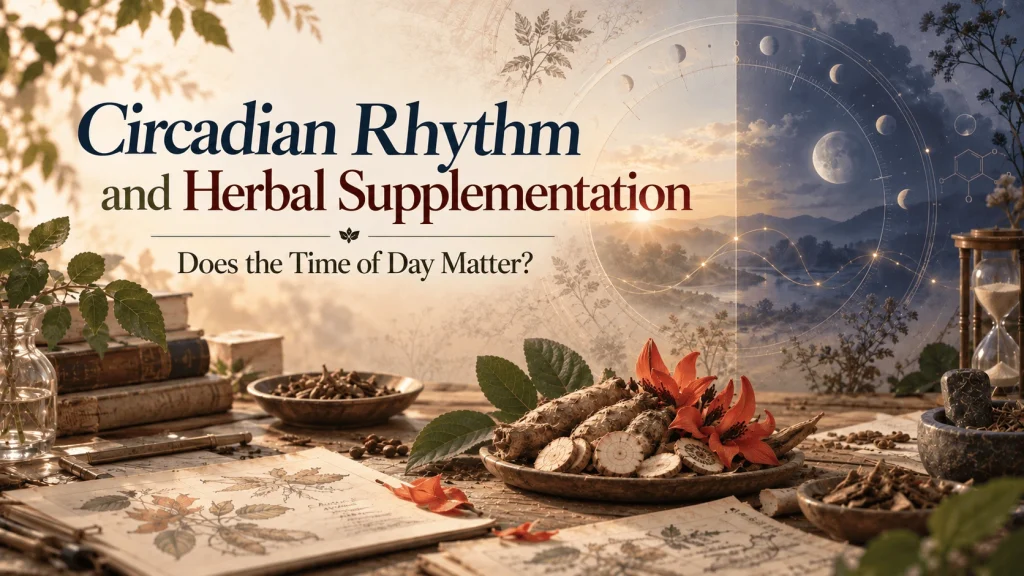
Circadian rhythm and herbal supplement timing with botanical herbs and a 24-hour biological clock

Circadian Rhythm and Herbal Supplementation: Does the Time of Day Matter?

Quick answer Circadian rhythms influence hormone patterns, sleep, metabolism, and processes involved in how compounds are absorbed and metabolised. Research on the optimal timing of herbal supplements is still limited, but consistent timing with meals, morning use of androgenic herbs, and avoiding energising herbs close to bedtime are practical principles discussed in relation to circadian

Circadian Rhythm and Herbal Supplementation: Does the Time of Day Matter? Read More »
Butea superba roots and flowers illustrating phosphodiesterase inhibition and vascular signalling

Butea superba and Phosphodiesterase Inhibition: A Plain-Language Explanation

Quick answer Butea superba phosphodiesterase inhibition involves compounds that have shown phosphodiesterase type 5 (PDE5) inhibitory activity in laboratory research. By slowing the breakdown of cGMP, this mechanism may support smooth muscle relaxation and blood flow, while other compounds in the herb may also influence nitric oxide and androgenic pathways. The effects are generally more

Butea superba and Phosphodiesterase Inhibition: A Plain-Language Explanation Read More »

Mucuna pruriens velvet bean pods and seeds with L-DOPA and dopamine scientific illustration for herbal research

Mucuna pruriens and L-DOPA: What Thai Herbal Tradition Understood Early

Quick answer Mucuna pruriens contains natural L-DOPA, a compound converted into dopamine in the body. Research has explored its relationship with neurological function, motivation, hormonal regulation, and male reproductive health, although individual responses may vary. Key takeaways Mucuna pruriens contains natural L-DOPA, which is converted into dopamine in the body. Dopamine pathways play important roles

Mucuna pruriens and L-DOPA: What Thai Herbal Tradition Understood Early Read More »

Pueraria mirifica and menopausal vasomotor symptoms with botanical root and hormonal research concept

Pueraria mirifica and Menopausal Vasomotor Symptoms: The Mechanism Behind Relief

Quick answer Pueraria mirifica may support menopausal vasomotor symptoms by providing phytoestrogenic compounds, including miroestrol and deoxymiroestrol, that interact with estrogen receptors involved in temperature regulation. Research has reported improvements in hot flash frequency and severity, although responses vary between individuals and it should not be considered a replacement for pharmaceutical hormone therapy. Key takeaways

Pueraria mirifica and Menopausal Vasomotor Symptoms: The Mechanism Behind Relief Read More »

Tonic herbs vs adaptogens with traditional roots, ginseng, and botanical ingredients

Tonic Herbs vs Adaptogens: A Clear Practical Difference for Supplement Users

Quick answer Tonic herbs and adaptogens support the body in different ways. Tonic herbs generally provide more direct, targeted support to specific tissues or physiological systems, while adaptogens primarily help regulate the body’s response to stress and improve overall resilience. Neither category is inherently better, and some herbal routines may benefit from using both together.

Tonic Herbs vs Adaptogens: A Clear Practical Difference for Supplement Users Read More »

pueraria mirifica and receptor downregulation

Pueraria mirifica and Receptor Downregulation: How to Avoid Supplement Plateau

Quick answer Pueraria mirifica may feel less effective over time when sustained phytoestrogen stimulation leads to receptor downregulation, reducing how strongly cells respond to the same dose. The article suggests that cycling, dose variation, and periodic breaks may help manage a supplement plateau, while also checking factors such as product consistency, timing, and absorption. Key

Pueraria mirifica and Receptor Downregulation: How to Avoid Supplement Plateau Read More »

image gen (1)

Pueraria Mirifica & Its Active Compounds: Natural Support for Breast Growth

Pueraria mirifica (White Kwao Krua) is a leguminous plant native to northern Thailand and Myanmar. Traditionally, it has been used in Thai medicine to support women’s health, vitality, and youthfulness. Modern research highlights that its bioactive compounds, particularly miroestrol and deoxymiroestrol, mimic estrogen activity in the body and may contribute to natural breast growth and

Pueraria Mirifica & Its Active Compounds: Natural Support for Breast Growth Read More »

envato labs image edit (2)

Puerarin in Pueraria mirifica: Science, Benefits, and Mechanisms

Pueraria mirifica (White Kwao Krua) is widely recognized for its potent phytoestrogenic effects, traditionally used in Thai herbal medicine for women’s wellness and rejuvenation. While much attention is given to miroestrol and deoxymiroestrol, two powerful estrogenic compounds, another significant bioactive molecule is puerarin, an isoflavone glycoside with extensive pharmacological potential. This article explores the science,

Puerarin in Pueraria mirifica: Science, Benefits, and Mechanisms Read More »