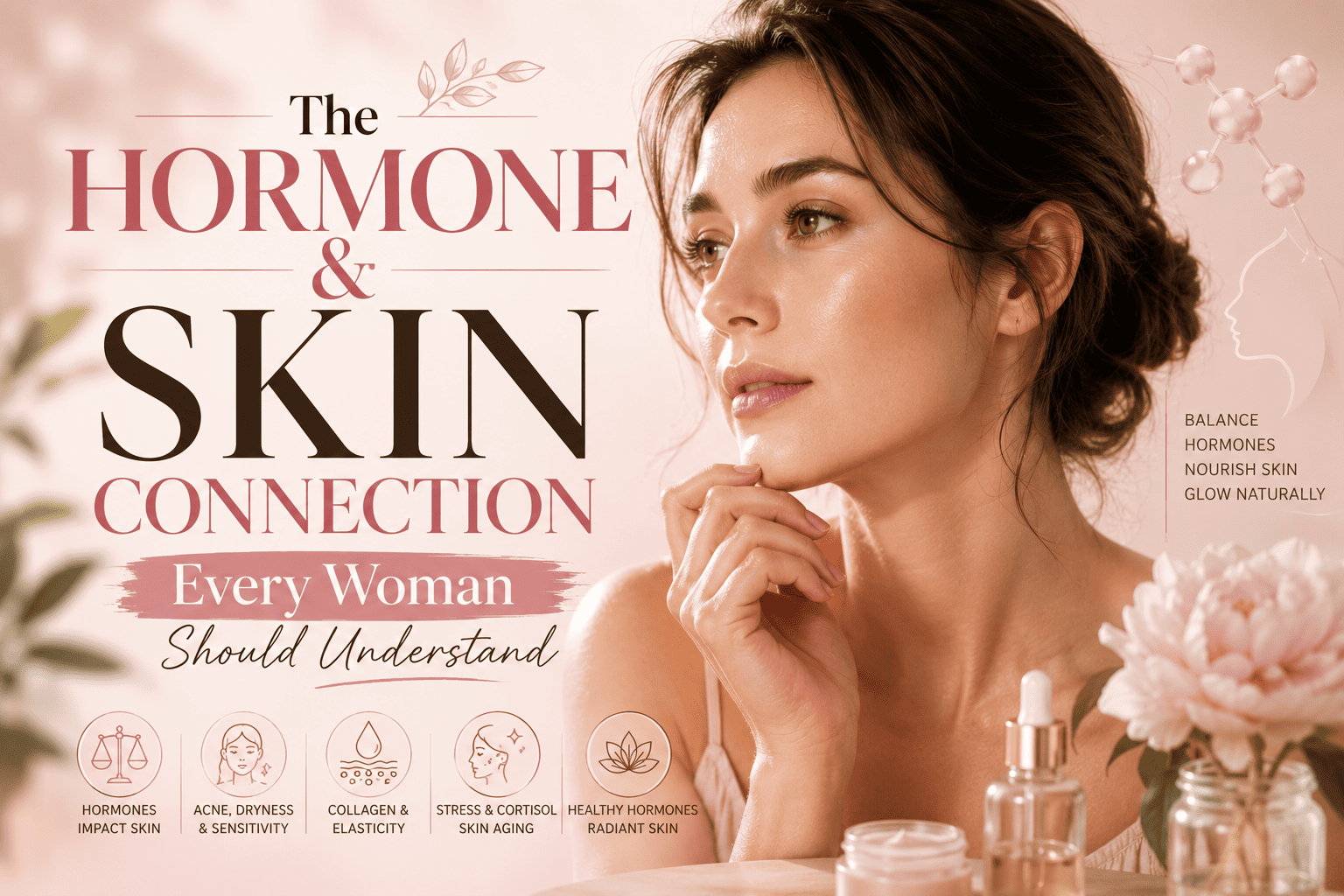
Many women are dedicated to their skincare routines — serums, SPF, retinoids, and carefully chosen ingredients. And yet, for a significant number of women from their mid-30s onward, something begins happening to their skin that topical products alone cannot fully reverse. What is happening is not a failure of your skincare routine. It is a hormonal shift occurring beneath the surface of the skin, at a cellular level that no serum can penetrate.
What Your Skin Is Really Telling You
The texture changes. The glow fades. Dryness becomes persistent. Fine lines settle more deeply than they used to. Your complexion is one of the most visible and sensitive reflections of your internal hormonal environment. Once you understand that relationship, your approach to skin health changes fundamentally.
This article explains exactly how estrogen and other hormones maintain youthful skin, what happens when those levels shift, and what the evidence says about supporting skin health from the inside through both nutrition and targeted supplementation.
How Estrogen Maintains Skin Health
Estrogen is one of the primary drivers of skin structural integrity and hydration, and it operates through several mechanisms simultaneously. When estrogen is at healthy levels, all of these processes work quietly in the background and your skin benefits without you needing to actively manage them.
When estrogen begins to decline — as it naturally does from the mid-30s and more significantly during perimenopause — all of these mechanisms slow down at the same time. The cumulative effect on the skin can be quite striking, even before women identify the hormonal connection.
What Low Estrogen Does to Your Complexion
The skin changes associated with declining estrogen are well documented in dermatological research. Understanding the scale of this impact helps explain why topical products feel suddenly insufficient.
The Cortisol and Skin Connection
Beyond estrogen, cortisol — the chronic stress hormone — has a direct and well-documented negative impact on skin quality.
The Double Collagen Hit
Women under chronic stress experience a compounding reduction in their collagen levels from two sources simultaneously — declining estrogen and elevated cortisol, which inhibits collagen synthesis directly. Elevated cortisol also increases sebum production (driving jawline breakouts), promotes systemic inflammation, and impairs the skin barrier's ability to retain moisture.
This is why women going through sustained stressful periods often observe skin ageing that feels disproportionate to their age or overall health picture. The answer is not simply a better moisturiser — it is cortisol management alongside hormonal support.
Phytoestrogens and Skin: What the Research Shows
Phytoestrogens are plant-derived compounds that interact with the body's estrogen receptors, producing a mild modulating effect on estrogen activity. They are found naturally in foods like soy, flaxseed, and legumes — and in higher concentrations in certain therapeutic herbs, most notably Pueraria mirifica, a plant native to northern Thailand.
These results are not immediate or dramatic in the short term. They represent a meaningful foundational approach to skin health that addresses the hormonal root cause rather than managing surface-level symptoms. The distinction matters if you are looking for lasting results rather than temporary improvement.
Building an Inside-Out Skin Routine
A genuinely effective approach to skin health addresses both topical and internal factors together. On the internal side, the following elements have the strongest evidence:
Adequate protein intake
Your body requires amino acids from protein as the raw material for collagen synthesis. Aim for approximately 1.2 to 1.5 grams per kilogram of body weight daily from varied, high-quality sources.
Antioxidant-rich foods
Berries, leafy greens, green tea, and colourful vegetables protect existing collagen from oxidative damage caused by UV exposure, pollution, and metabolic stress.
Consistent hydration
Skin is one of the last tissues to receive water when you are even mildly dehydrated. Adequate, consistent hydration throughout the day is non-negotiable for maintaining skin plumpness and elasticity.
Vitamin C
Essential for collagen synthesis as a required cofactor for the enzyme that forms collagen. Both dietary sources and quality supplementation are relevant here.
Quality sleep
Skin repair and collagen regeneration happen predominantly during deep sleep stages. Chronic sleep deprivation is one of the fastest accelerators of skin ageing available.
Phytoestrogen supplementation
Consistent use of Pueraria mirifica or other phytoestrogen-containing herbal supplements addresses the hormonal dimension of skin decline at the level where it actually originates.
Combining Internal and Topical Care for Best Results
Internal and topical skin support are not competing approaches. They address different layers of the same challenge.
- Protects skin from environmental damage
- Delivers immediate hydration to outer layers
- Treats visible surface concerns like texture
- SPF prevents further UV collagen degradation
- Signals fibroblasts to produce new collagen
- Restores hyaluronic acid synthesis from within
- Addresses the hormonal root cause of skin decline
- Creates conditions for lasting, self-sustaining renewal
Together they produce results that neither can achieve alone. A practical starting point: if you have invested heavily in topical skincare without addressing nutrition, sleep, hydration, and hormonal balance, you are likely leaving a significant portion of your skin's potential unrealised.
The most effective skincare investment is the one most often overlooked: supporting your hormonal and nutritional foundation. What you nourish internally shapes your skin's cellular environment in ways that no topical product can fully replicate from the outside.
Invest in Your Skin From the Inside Out
Stherb's Beauty From Within Collection combines Pueraria mirifica extract with collagen-supporting botanicals and antioxidants to support skin hydration, firmness, and radiance at the hormonal level. Developed for women who want results that go deeper than the surface.
Explore Stherb Products →