Herbs
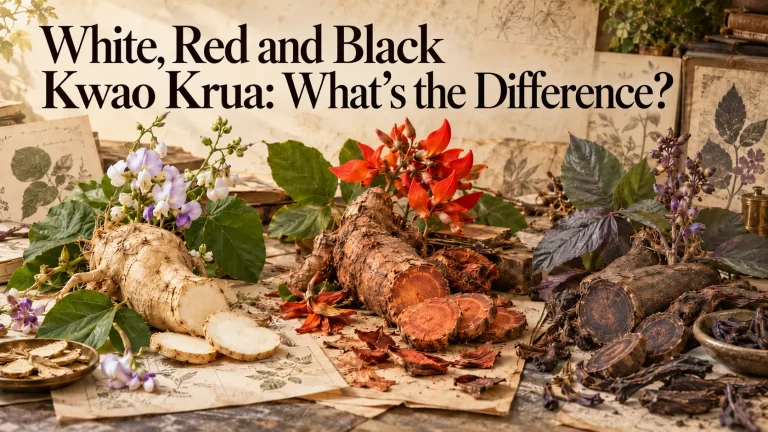
White, Red and Black Kwao Krua: What’s the Difference?
White, red and black Kwao Krua are three different Thai plants, not three strengths of one herb. Here's how to tell them…

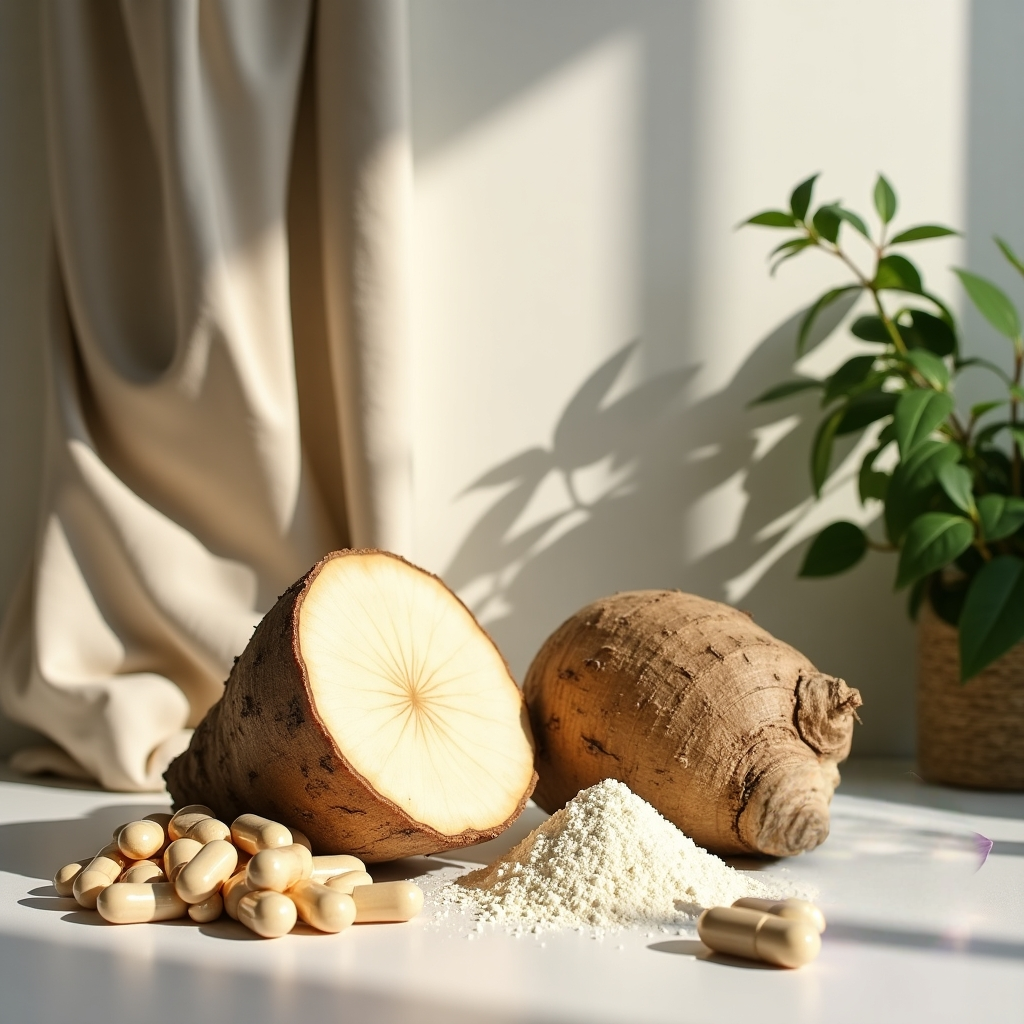
Pueraria mirifica (White Kwao Krua) is a leguminous plant native to northern Thailand and Myanmar, renowned for its rejuvenating and estrogenic properties. Traditionally used in Thai medicine for women’s health and vitality, modern studies have focused on its unique phytoestrogens, natural plant compounds that mimic the effects of estrogen in the body. Among these, miroestrol and deoxymiroestrol stand out as key active ingredients believed to play a significant role in breast growth and firmness.
The major bioactive compounds in Pueraria mirifica include:
Research indicates that these compounds work together to stimulate mammary gland development and improve skin elasticity, factors often associated with youthful and fuller breasts.
Pueraria mirifica’s phytoestrogens interact with estrogen receptors in breast tissue. This interaction may help:
In a study by Cherdshewasart et al. (2008), P. mirifica extracts demonstrated strong estrogenic activity both in vitro and in vivo, comparable to natural estrogen in promoting mammary gland proliferation in animal models.
Furthermore, a 2017 study reported that miroestrol and deoxymiroestrol act as estrogen receptor agonists, suggesting their ability to influence breast tissue growth without the synthetic hormone side effects (Kang et al., 2017).
When used in appropriate doses, Pueraria mirifica is generally well-tolerated. However, excessive intake or unsupervised use could lead to hormonal imbalance or side effects such as breast tenderness or menstrual irregularities.
It’s recommended to use standardized extracts from reputable sources and avoid long-term continuous use without professional guidance.
Pueraria mirifica’s reputation for natural breast enhancement is supported by emerging scientific evidence. Its unique phytoestrogens, especially miroestrol and deoxymiroestrol, provide a plausible mechanism for stimulating breast tissue development and improving firmness. While more human studies are needed, the herb remains a fascinating botanical alternative for those seeking gentle, plant-based support for women’s wellness.
Cherdshewasart, W., Panriansaen, R., & Picha, P. (2008). Phytoestrogenic effects of Pueraria mirifica on the mammary gland and uterus of rats. Journal of Ethnopharmacology, 118(2), 280–285. https://doi.org/10.1016/j.jep.2008.04.021
Kang, S. C., et al. (2017). Estrogenic activity of miroestrol and deoxymiroestrol isolated from Pueraria mirifica. Phytomedicine, 25, 84–91. https://doi.org/10.1016/j.phymed.2016.12.018
Laupattarakasem, P., et al. (2009). Pueraria mirifica phytoestrogens improve dyslipidemia and enhance estrogen receptor response. Clinical Interventions in Aging, 4, 543–552.
Explore our website for more upcoming content: Click Here
Explore Stherb’s Thai herbal skincare and supplements, crafted from research-backed botanicals.
White, red and black Kwao Krua are three different Thai plants, not three strengths of one herb. Here's how to tell them…
There is no single Pueraria Mirifica dosage. Here is how to read the label, compare forms, and dose safely.
Pueraria Mirifica can cause side effects because it contains biologically active phytoestrogens that interact with estrogen receptors. Reported effects include breast tenderness,…