Herbs
White, Red and Black Kwao Krua: What’s the Difference?
White, red and black Kwao Krua are three different Thai plants, not three strengths of one herb. Here's how to tell them…

A 10-point label checklist for choosing a genuine Pueraria Mirifica supplement, from species name to certification.
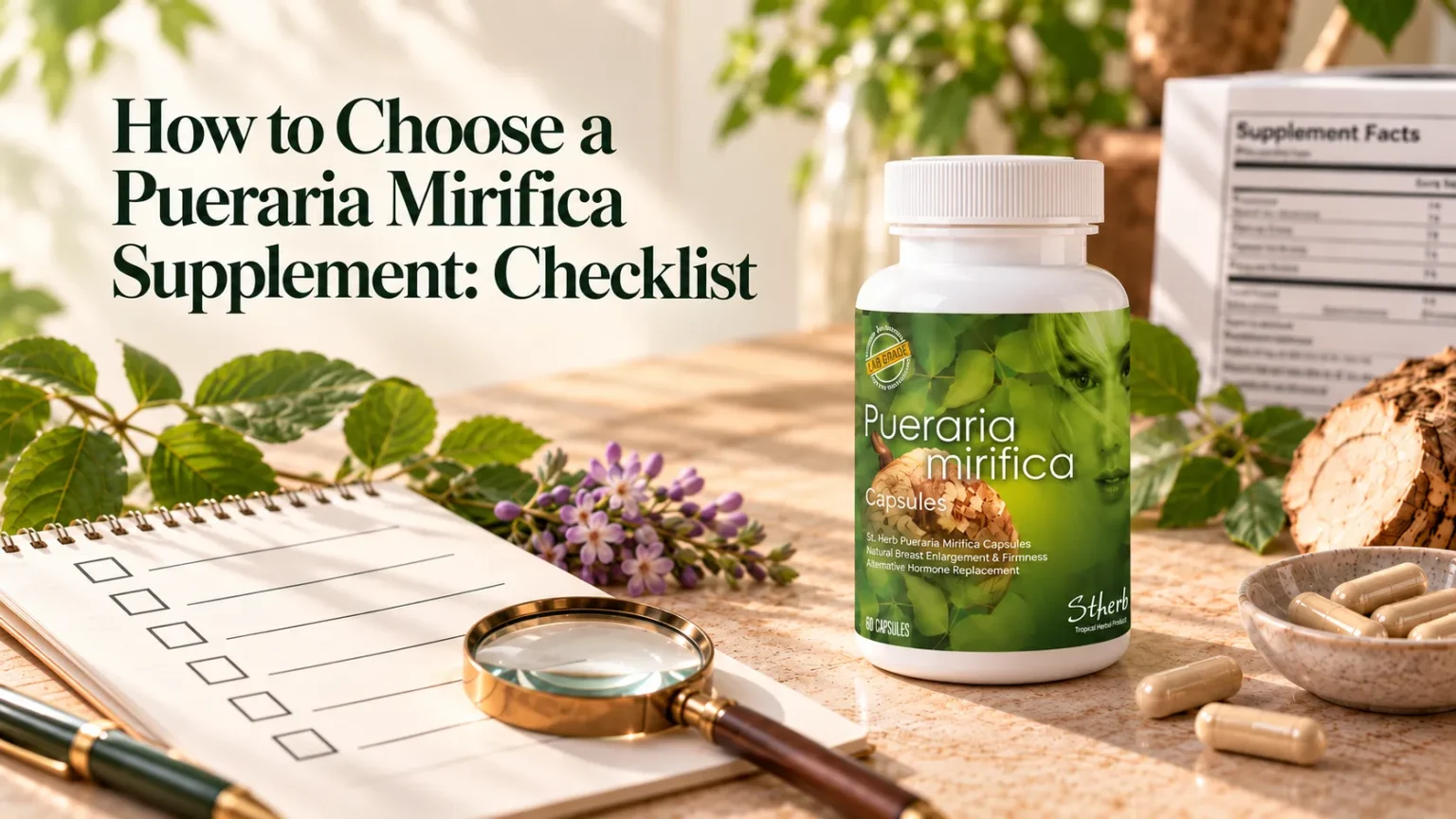
The best Pueraria Mirifica supplement is the one whose label you can actually verify. That means a full species name, a clear milligram amount per serving, a properly formatted Supplement Facts panel, and real, checkable certification. Quality varies widely between products, and the label itself is the quickest way to tell a well-documented product from a vague one.
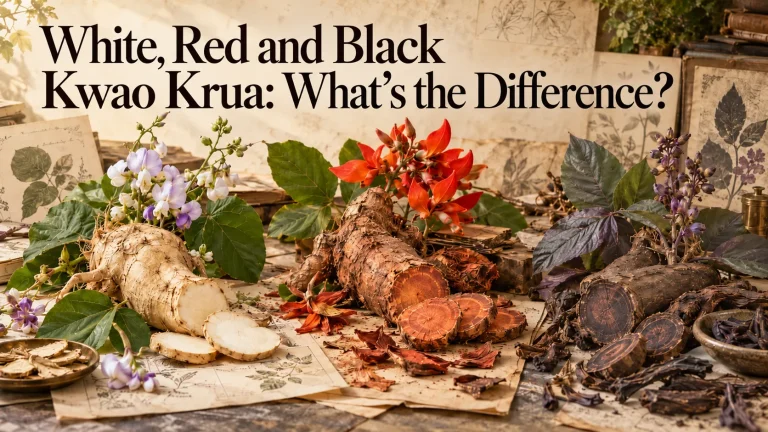
Part of the problem is naming. As covered in our article on white, red, and black Kwao Krua, several different plants share overlapping Thai folk names and a similar root appearance. A molecular, chemical, and microscopic analysis of white Kwao Krua products actually sold in Thailand found exactly this kind of species-authentication problem in the commercial market, which is one reason species testing methods exist at all.
Part of it is regulatory. In the US, a dietary supplement does not need pre-market approval of its efficacy the way a drug does, according to the FDA’s own consumer guidance on dietary supplements. That gap is also why marketing claims have occasionally gotten ahead of the evidence: Finland banned Pueraria Mirifica from cosmetic products in 2009 over unproven breast-enhancement marketing, and the FDA has separately issued warning letters to marketers of “alternative hormone therapy” supplements over unapproved disease and body-structure claims.
None of that means every Pueraria Mirifica product is suspect. It means the label is doing real work, and it pays to actually read it rather than relying on a product photo or a brand’s reputation alone.
The checklist below is written so you can run it on any Pueraria Mirifica product, whatever brand sells it, before you buy.
Ten things worth checking before you buy:
The table below lines these up against what each one actually means for you as a buyer.
| What you see on the label | What it means | Good sign or caution |
|---|---|---|
| Full species name: “Pueraria candollei var. mirifica” or “Pueraria mirifica“ | Confirms it is the specific plant this article is about, not a related but different species | Good sign |
| Just “Pueraria” or “herbal blend” with no species name | You cannot confirm whether it’s Pueraria mirifica, a cheaper relative like kudzu, or something else entirely | Caution |
| Milligrams of Pueraria Mirifica listed per serving, separate from total capsule weight | You can see the actual amount of the herb itself, even in a blended capsule | Good sign |
| Only a total capsule or tablet weight given, no herb-specific amount | You don’t know how much Pueraria Mirifica, if any, is actually inside | Caution |
| A properly formatted “Supplement Facts” panel (serving size, servings per container, ingredient amounts) | Meets the US FDA’s basic dietary supplement labeling format | Good sign |
| No Supplement Facts panel, or no serving size listed | May fall short of basic US labeling requirements | Caution |
| A named, dated quality certificate you can verify independently (such as a GMP certificate with an issuing body and number) | Manufacturing oversight exists and is independently checkable | Good sign |
| A vague “certified” claim with no issuing body, number, or date | Cannot be verified and may not mean much on its own | Caution |
| Batch or lot number and an expiration date | Basic quality control and a way to track freshness or a recall | Good sign |
| No lot number or expiration date anywhere | No way to verify freshness or trace the product if there’s ever a problem | Caution |
| Manufacturer or distributor name, address, and a way to report a problem | Required by the FDA for US-sold supplements; shows there’s someone accountable | Good sign |
| Claims like “cures,” “guaranteed,” “clinically proven,” or a specific cup-size promise | Regulators have taken action against supplement marketers for exactly this kind of claim before | Caution |
Root powder is dried, ground Pueraria Mirifica root. It’s closer to the traditional whole-root form, but the natural concentration of active compounds can vary somewhat from one harvest to the next.
A standardized extract is processed to guarantee a consistent percentage of a marker compound from batch to batch, which gives more predictable dosing but is a more processed product than raw powder. A liquid extract works on the same standardization principle, concentrated into a liquid dosed by the millilitre or by drops rather than by capsule.
Neither form tells you anything about dose on its own; a standardized extract can still be taken at a low or high amount, and a powder can still be concentrated or diluted depending on how it was processed before packaging. The label items from the checklist above, especially the milligram amount per serving, matter regardless of which form you pick.
Neither form is inherently better; they’re different trade-offs between tradition and consistency. St.Herb sells examples of both: a 100% Pueraria Mirifica herb powder extract and a high-concentration liquid extract. Whichever form or brand you choose, the checklist above applies the same way.
A few warning signs are worth calling out on their own, without pointing at any specific brand:
For a closer look at telling genuine herbal products from fake ones more broadly, see our guide to fake and real supplements and cosmetics.
Traceability starts at the farm. See our farm for where our Pueraria Mirifica is actually grown, and how we track it from farm to shelf for the fuller process.
Our current certificates are kept up to date on our certificates page, where you can check the specific issuing body, certificate number, and validity date yourself, which is exactly the kind of verification this checklist recommends looking for from any brand.
As with any Pueraria Mirifica product, follow the directions on the product label, or ask your doctor, rather than a generic dose found online. See the St.Herb Breast Capsules product page for its own label and directions.
Confirm the full species name, Pueraria candollei var. mirifica or Pueraria mirifica, and the milligram amount of that specific ingredient per serving, not just the total capsule weight.
Neither is automatically better. Powder is closer to the traditional whole dried root but can vary naturally from batch to batch. A standardized extract is processed to keep a marker compound consistent, which gives more predictable dosing. The right choice depends on what you’re looking for in a product.
Not necessarily just because of price, but a price far below what raw root or standardized extract normally costs to produce is worth a closer look at the label, since it can be a sign of dilution or substitution with a cheaper, unrelated plant.
Specific disease claims, guarantees, or an exact promised result such as a cup-size increase. Regulators, including the US FDA, have taken action against supplement and hormone-cream marketers for exactly this kind of unproven claim in the past.
Through farm-level traceability and documented quality certificates, covered in the sections and linked pages below.
Explore the product this article talks about — crafted from research-backed Thai botanicals.
White, red and black Kwao Krua are three different Thai plants, not three strengths of one herb. Here's how to tell them…
There is no single Pueraria Mirifica dosage. Here is how to read the label, compare forms, and dose safely.
Pueraria Mirifica can cause side effects because it contains biologically active phytoestrogens that interact with estrogen receptors. Reported effects include breast tenderness,…