
Wellness
Cortisol and Estrogen: Why Chronic Stress Reshapes Female Hormone Balance
Chronic stress does more than raise cortisol. It may also change how sensitively estrogen receptors respond, which is why symptoms can persist…

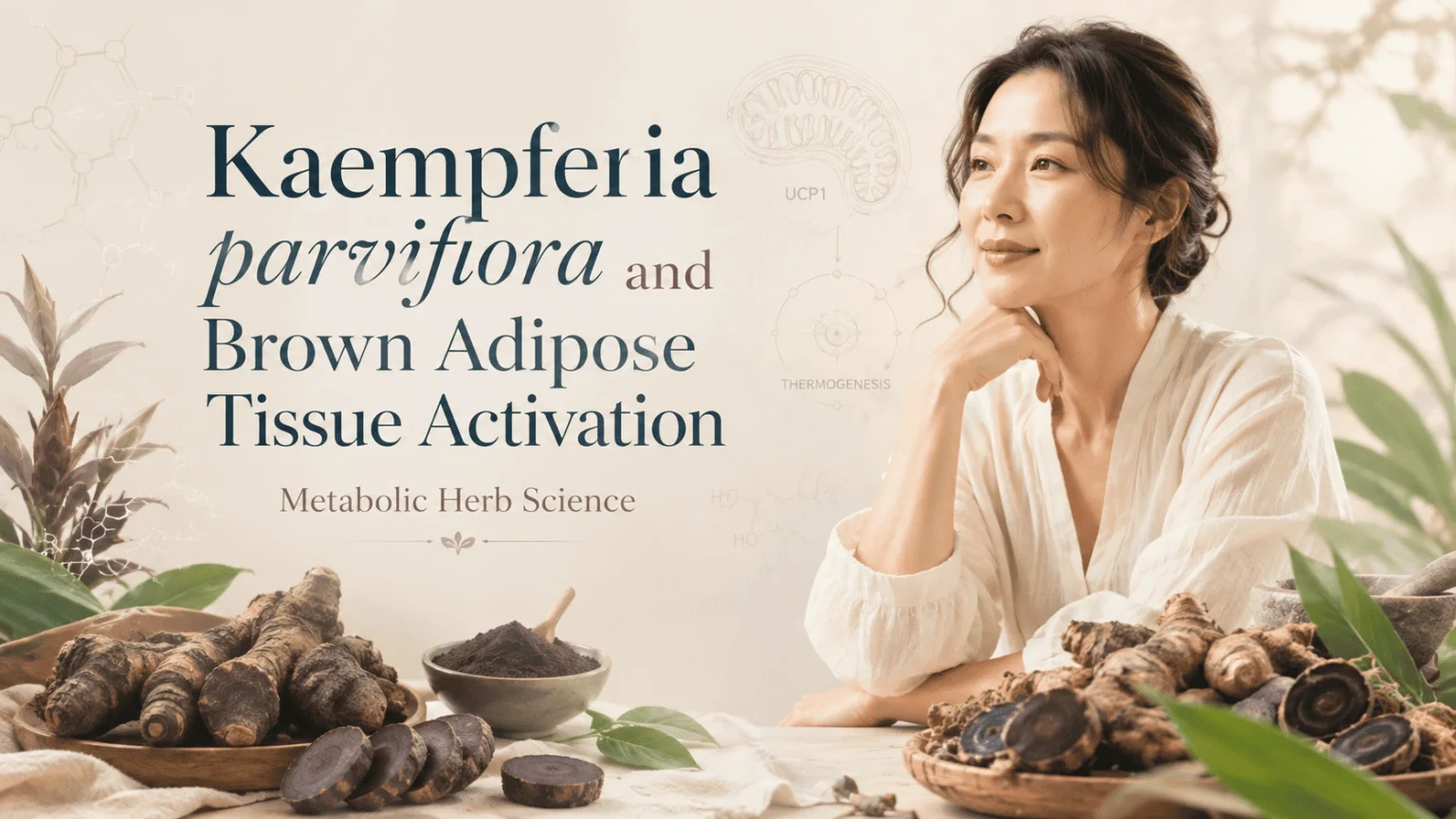
Kaempferia parviflora may support metabolism by promoting brown fat thermogenesis, a process in which brown adipose tissue burns energy to generate heat. Research suggests that compounds in black ginger may increase UCP1 expression and support mitochondrial activity, while human studies have reported modest improvements in body composition and metabolic markers. Human evidence, however, remains limited.
When people talk about metabolism and weight management, the conversation usually centres on calorie restriction and exercise. Those factors matter, of course. But there is a less commonly discussed physiological system that plays a surprisingly significant role in how the body manages energy, and it is one that Kaempferia parviflora appears to engage with directly. That system involves brown adipose tissue, a specialised type of fat that generates heat by burning energy rather than storing it.
Kaempferia parviflora, a Thai herb known locally as black ginger or krachai dam, has developed a reputation primarily around energy and physical performance. Research on its polymethoxyflavone content has revealed mechanisms that go considerably deeper than simple stimulation. The herb’s potential to activate brown fat thermogenesis is one of the more interesting findings to emerge from metabolic research on Thai botanical compounds.
Most people are familiar with white adipose tissue, which is the fat that accumulates around the waist, hips, and thighs. White fat is primarily a storage depot. It holds excess energy in the form of triglycerides and releases it when the body needs fuel. It also produces hormones and inflammatory signals, and excess white fat, particularly visceral fat around the organs, is associated with metabolic disruption.
Brown adipose tissue is fundamentally different. Its cells are packed with mitochondria, which are the energy-producing organelles in every cell. These mitochondria express a unique protein called uncoupling protein 1, or UCP1. Under normal conditions, mitochondria use the energy released from burning fuel to produce ATP, the cellular energy currency. UCP1 uncouples this process, meaning the energy is released as heat instead of being stored as ATP.
This process of generating heat from metabolic fuel is called thermogenesis. Brown fat thermogenesis burns calories and glucose without producing mechanical work or stored energy. It is part of how the body maintains its core temperature in cold environments, and it appears to play a role in long-term body weight regulation.
Human adults have smaller quantities of brown fat than infants, but research over the past two decades has confirmed that adults do retain functional brown adipose tissue, primarily around the neck, collarbone, and kidneys. The amount of active brown fat varies considerably between individuals, and people with more active brown fat tend to have better metabolic profiles, including more stable blood sugar and lower body fat percentages. The key finding for herbal research is that brown fat activity can be stimulated by certain biological and chemical signals.
The primary active compounds in Kaempferia parviflora that have attracted metabolic research interest are its polymethoxyflavones, including 5,7-dimethoxyflavone and 3,5,7,3,4-pentamethoxyflavone. These compounds have shown activity at several points relevant to brown fat biology.
Studies in cell cultures have found that Kaempferia parviflora extracts increase the expression of UCP1 in fat cells. This is significant because UCP1 upregulation is the molecular switch that turns fat cells toward heat generation rather than storage. The same studies have found increases in markers of mitochondrial biogenesis, meaning the treatment stimulated the production of more mitochondria within fat cells, which supports their capacity for thermogenic activity.
Animal studies have provided more context. Rodents supplemented with Kaempferia parviflora extracts showed reduced accumulation of white adipose tissue and markers of increased energy expenditure compared to control groups. Body weight gain in supplemented animals was lower under high-fat diet conditions, which is a common experimental model for studying metabolic protection.
Human research is more limited but growing. A clinical study published in a peer-reviewed journal found that supplementation with Kaempferia parviflora extract over several weeks resulted in improvements in body composition, energy expenditure, and metabolic rate markers in healthy adult participants. The effect sizes were modest but consistent with the mechanistic predictions from cell and animal research.
The polymethoxyflavones in Kaempferia parviflora also inhibit phosphodiesterase enzymes, which increases intracellular cyclic AMP. This is mechanistically relevant because cyclic AMP is a key signal in the beta-adrenergic pathway that activates brown fat thermogenesis. In other words, the herb may activate brown fat through the same signalling pathway that cold exposure and exercise use.
The thermogenic mechanism of Kaempferia parviflora places it in an interesting category: a botanical that may support metabolic rate through a pathway that does not involve stimulants like caffeine. Most commercially available fat-burning supplements work primarily through sympathomimetic stimulation, raising heart rate and increasing adrenaline output. The brown fat mechanism is distinct from this and may be better tolerated by people sensitive to stimulant effects.
Beyond body composition, brown fat activity has associations with blood sugar regulation and insulin sensitivity. When brown fat is actively taking up glucose to fuel thermogenesis, it acts as an additional glucose sink alongside skeletal muscle. This may be part of why metabolic research on Kaempferia parviflora has found improvements in blood sugar management markers in some studies.
It also supports the traditional Thai use of this herb for physical energy and endurance. If the herb is increasing mitochondrial density and metabolic efficiency at the cellular level, the perceived energy benefit reported by traditional users would be consistent with these findings rather than simply being a placebo effect.
Kaempferia parviflora brown fat thermogenesis research opens up a more nuanced understanding of what this herb actually does in the body. It is not simply an energy stimulant or testosterone booster, though both of those effects have also been studied. It appears to work at a deeper metabolic level by encouraging fat cells to behave more like energy burners than energy stores.
For anyone interested in supporting their metabolic health through botanical means, Kaempferia parviflora deserves a serious look. It is an unusual herb in the sense that its mechanisms are becoming better understood in scientific terms, and those mechanisms align well with what traditional Thai practitioners have observed over centuries of use.
Explore Stherb’s Thai herbal skincare and supplements, crafted from research-backed botanicals.
Chronic stress does more than raise cortisol. It may also change how sensitively estrogen receptors respond, which is why symptoms can persist…
Quick answer Butea superba may support vascular function by influencing the nitric oxide pathway, which helps blood vessels relax and improves blood…
Quick answer Systemic inflammation can interfere with hormone production, transport, and receptor sensitivity, which may affect how effectively hormonal signals are received…